
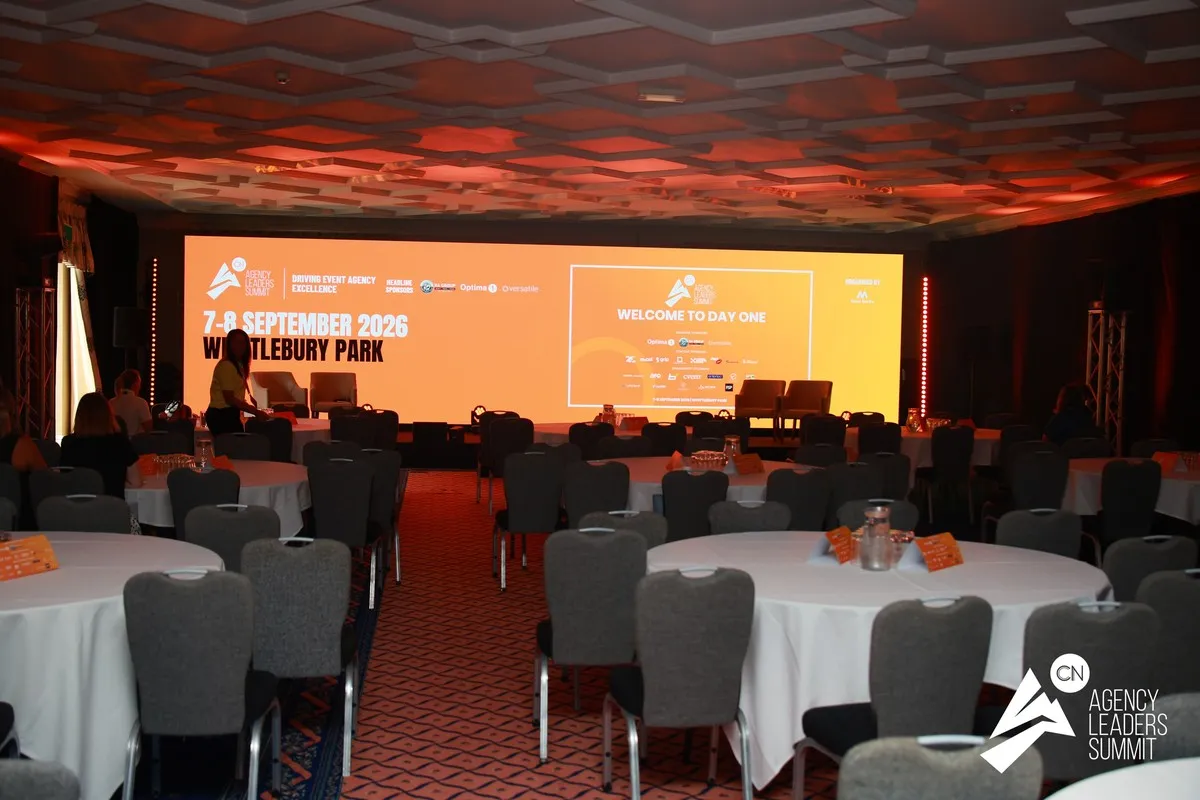
The Conference News Agency Leaders Summit 2026 was held last week, on the 7 and 8 September at Whittlebury Park.
The event brought together senior leaders from the event agency community for two days of content and curated networking to support running an events business. In this article, we summarise some of the key sessions that took place across the two days.
Day One:
The Courage to Confront: The Leadership Conversations That Change Everything:
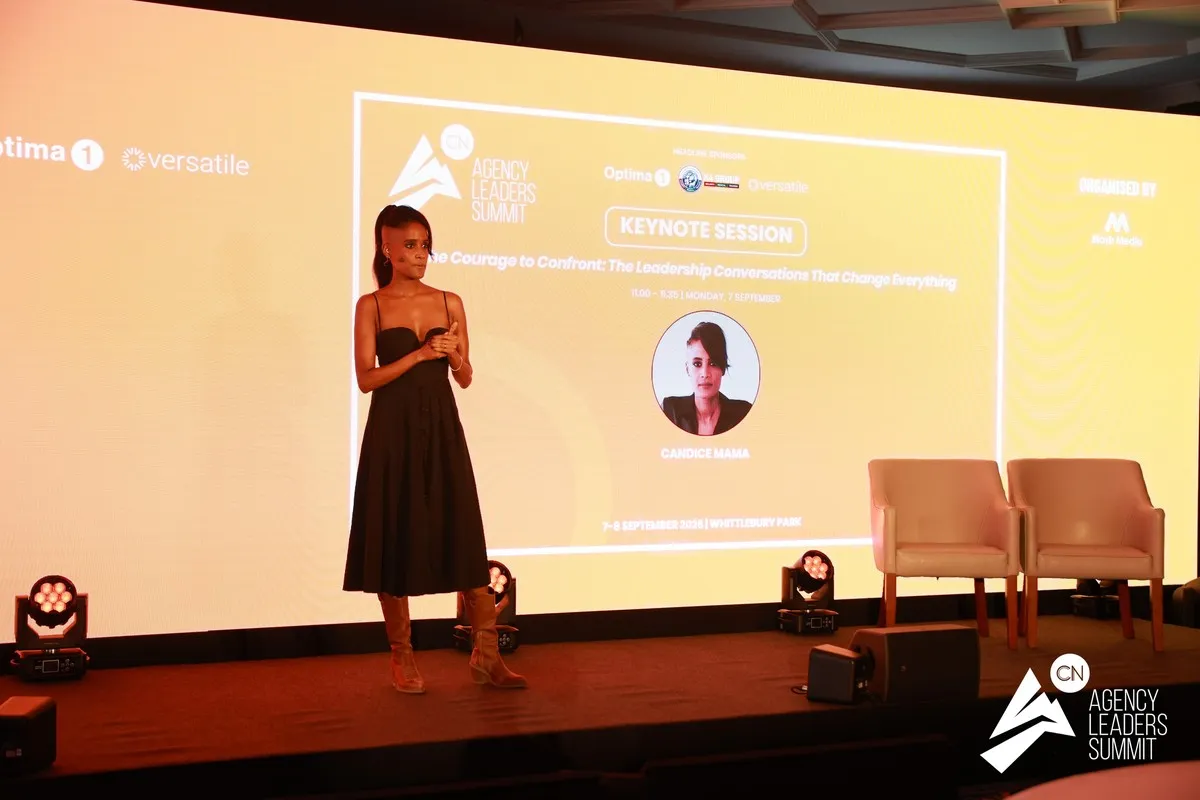
Keynote speaker Candice Mama opened with the story that has come to define her public work: at 24, she sat across from Eugene de Kock, the apartheid-era operative serving 212 years for 89 murders, including that of her father, who was killed when she was nine months old.
Mama walked the audience through the encounter itself – the antique-feeling room inside Kgosi Mampuru prison, the tea and scones, her family lined up on one side of a long table, and the moment de Kock arrived in an orange jumpsuit and greeted each of them with “pleasure to meet you”.
After her mother asked what had happened to her husband, and each family member took their turn, Mama asked de Kock a single question: did he forgive himself? It was the first time in the meeting he moved, wiping his eye and saying, “when you’ve done the things I’ve done, how do you forgive yourself?” She then asked to hug him.
From there she drew out the lesson she wanted the room to take away: whatever controls your emotions controls your life. The things that hurt you are rarely the things that heal you, she said, and waiting for an apology, a different outcome or a redo keeps people stuck. Healing, in her framing, is a salsa dance rather than a straight line – forward, back, forward again.
She was direct about the workplace relevance. People bring their whole selves to work whether they mean to or not, and unexamined pain shows up as frustration when colleagues don’t see a problem the way you do. Her prompts to the audience: stop competing in the “pain Olympics”, separate your identity from the thing that wounded you (a failed business, a lost job, a broken relationship), and confront the thing in front of you even when your voice shakes.
What can Uber, Airbnb and Checkatrade teach us about event performance?
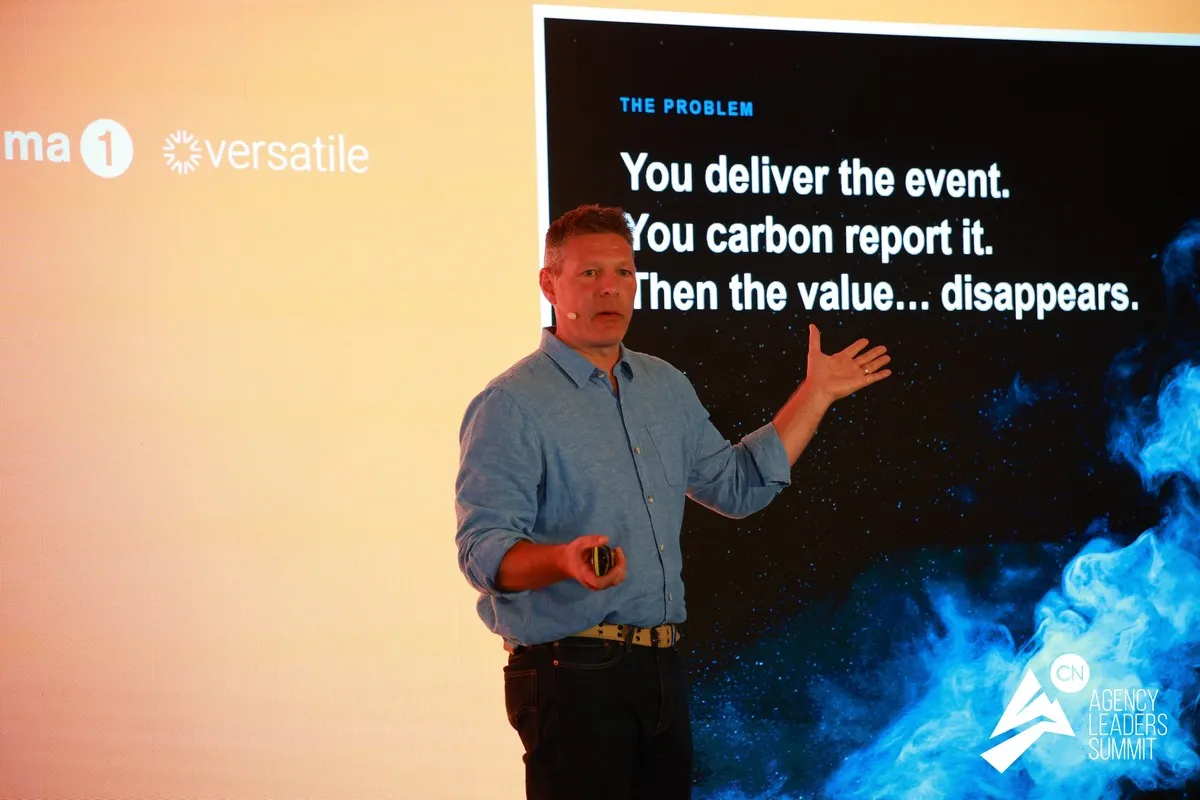
Matt Grey, co-founder of Event Decision, promised the room a sustainability talk with no mention of carbon, reframing the conversation from “sustainability” to “responsibility” and drawing lessons from consumer brands.
He set up the commercial stakes first: KPMG and McKinsey now assign meaningful premiums to valuations based on demonstrable ESG performance, and 72% of respondents in one M&A survey said they had walked away from a deal because of red flags in due diligence. Responsible delivery, he argued, is no longer a menu-and-cushions conversation but a valuation one, and it shows up in almost every RFP agencies are answering.
The problem is that most agencies commission a post-event carbon report, send it to the client, collect a badge, and watch the value disappear. Each event sits in its own silo, and none of the data compounds into something the agency can use to win the next pitch.
His analogy was Uber. When you rate a driver, the record stays with the driver – it builds their reputation. Events, by contrast, hand all the performance data to the client and keep nothing. The only way to demonstrate comparative advantage in ESG is to have comparative data, and that benchmark now exists across a database of more than 10,500 events.
To make it concrete, Grey put Cheerful Twentyfirst’s numbers on screen, benchmarked against the sector average across 30 points of comparison. He also made the case for social value as a quantifiable figure baked into event delivery – catering staff, cleaners, crew – which on Cheerful Twentyfirst’s recent work accounted for around 20% of total event budget, or more than $100,000 over three months.
His parting challenge: when a client walks away, what happens to their event performance data? If the answer is “nothing”, that’s the opportunity.
Investable areas to grow your agency in 2027:
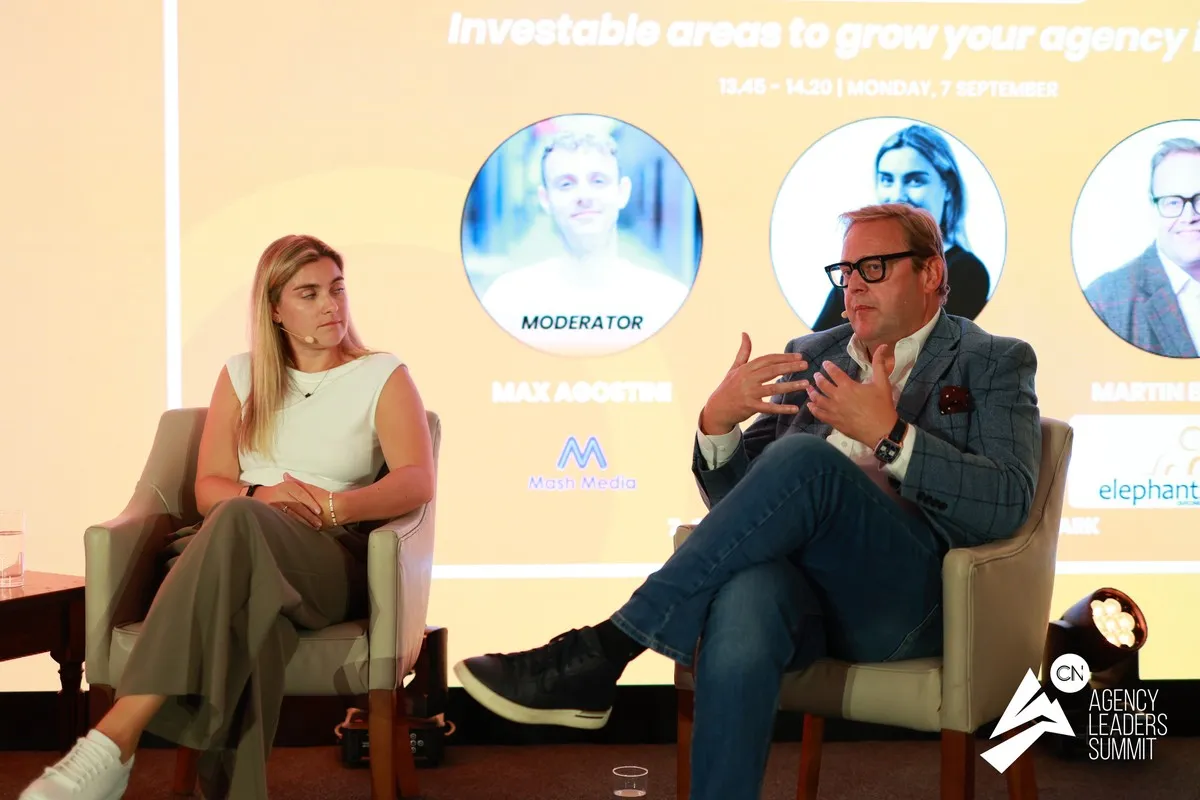
Martin Brown, founder of Elephant’s Child Advisory, and Zoe Light, head of agency at asembl, offered two perspectives on agency growth – one from the M&A and valuations side, one from inside a live agency group.
Brown opened with the market picture. Events is heavily fragmented, but consolidation is real and private equity is circling. He urged owners to know the value of their business, and framed planning around what he called the “James Bond theory” – where’s your exit, what does it look like, and what’s the timeline? A recent client came to him thinking £3m would set them up; taken to market properly, the business was worth £4m.
Light described asembl.group as a collective of independent partners – exhibitions, production, creative – who come together as one powerhouse on pitches but retain their own clients and specialisms. Each client has a single point of contact, so the wider offer never feels diluted. Growth, she argued, isn’t only financial: it’s also the sectors you work across, the culture you build, and the people you develop.
Both pushed back on the idea of growth as a straight line. Brown noted that academic growth models look tidy on paper but feel very different in practice. Light made the case for the plateaus: speed bumps force you to pause, revisit the why, and check you’ve got the right people for the next jump.
On existing clients, Brown was blunt that agencies often miss what’s right in front of them – lifetime value in the current client base is usually the best starting point. Light agreed but warned against complacency: a ten-year relationship can be turned by one competitor knocking on the door. Her phrase for it: “timing of the transparency.”
On diversification, Brown cautioned that going too broad dilutes culture and skill, and preferred related buy-and-build. AI came up as the area of most confusion: plenty of agencies claim an AI story, but few have built genuine IP. On people, Light said cultural fit matters as much as skill set at hire.
Brown finished with three points: moments of truth in client service win longevity; talent is genuinely scarce; and if you can’t change the people, change the people.
Day Two:
Choose your adventure – start-up, scale, or exit?
Day two began with a ‘choose your adventure workshop, where delegates could choose whether to join a table discussing start up, scale or exit.
With the nature of events, agency leaders often struggle to look beyond the day-to-day operations, and think about what they actually want from their business long-term. This session allowed for leaders in all stages of their business’ lives to ask our experts honest questions about how to best take on the next step, and understand some of the challenges or opportunities that come with it.
Are we winning enough business through social media?
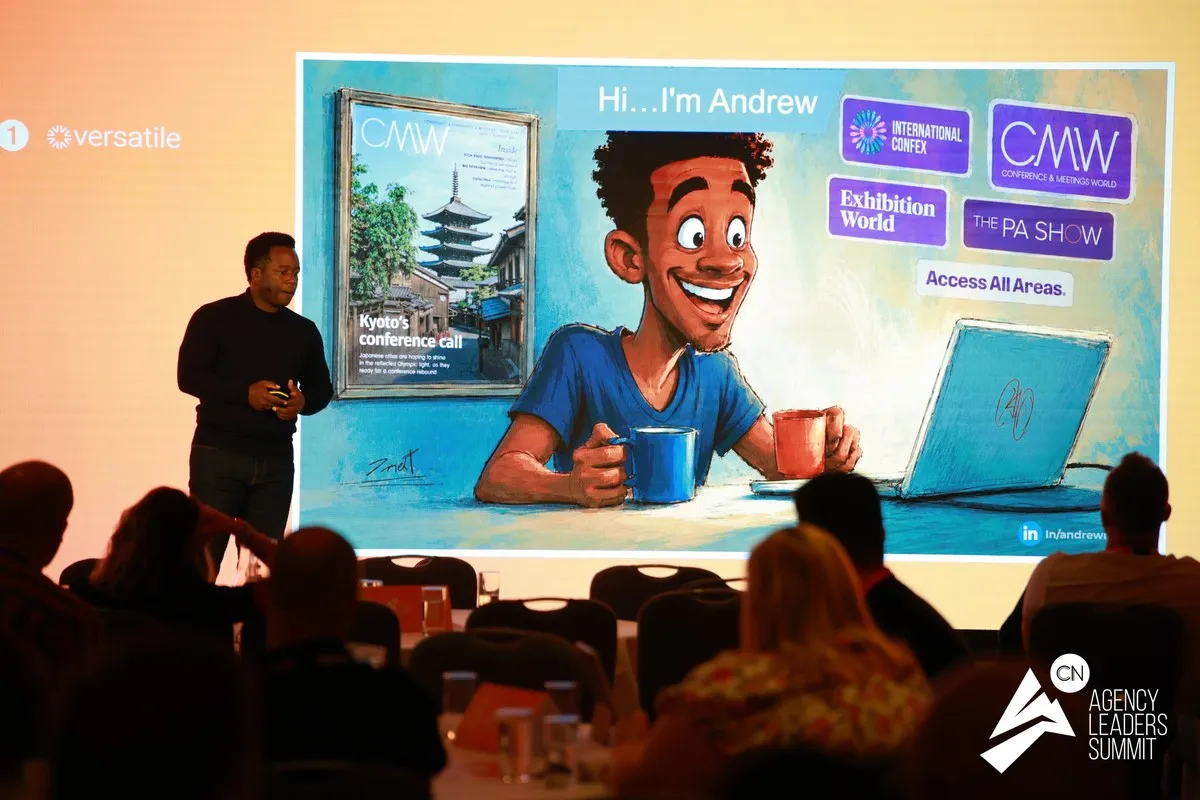
A 25-year digital veteran – Pop Idol, the BBC, and the launch team for MySpace – opened with the “so what” question: why are you actually posting? Without a clear objective, you’re just doing stuff.
Social media, he argued, comes down to three things: create, distribute, convert.
On create, every events company is now a media company by default. Two underused tactics: recycle old content, and lean into generative AI now, before the window closes.
On distribute, he pushed back on “content is king.” Content is king only if people see it, and there are just three ways they find you: search, share, and stumble (algorithms). Organic reach on follower-based feeds is now around 5% at best.
Beyond posting, he made the case for three quieter tactics: connecting with the right people, commenting strategically on other people’s posts, and starting inbox conversations. One witty comment on a “caption this” post led him to podcast invites, a book deal and paid work.
His closing point was on timing and trust. Most people post either top-of-funnel awareness content or bottom-of-funnel “buy this” content, and neglect the middle – which is where the money is. “Forget control, focus on influence.” And develop a real personality online: people follow you because they know you, like you because of how you show up, but only buy when they trust you.