
The Global Event Tech Summit 2026 brought together senior event professionals and technology leaders for a day exploring how innovation is transforming the industry. Attendees included corporate planners, exhibition organisers, agencies, associations, not-for-profits and event technology companies.
One theme kept surfacing throughout: AI is already changing how events are created, marketed and delivered, but human input still shapes whether they succeed. Technology can improve efficiency and insight, but creativity, strategy and genuine connection remain central to a successful event.
Digital wellbeing in focus
Wellbeing expert, author, and ceo of consultancy PVL, Petra Velzeboer opened the conference with a keynote on digital wellbeing. She explored how event professionals could build a healthier relationship with technology.
Drawing on her latest book, Digital Wellbeing: Recharge Your Focus and Reboot Your Life, she shared practical ways to protect attention, set boundaries around screen time, reduce burnout and stay focused during the working day.
She also encouraged delegates to make time for face-to-face conversations and uninterrupted work, arguing that these habits become even more important as AI and event technology continue to reshape the industry. Her message was clear. Technology should support better experiences without losing the human element.
Building communities through authentic human connection
As AI increasingly shapes how audiences research and make decisions, organisers face a new question: how do you build trust and forge real connections before, during and after the event ends?
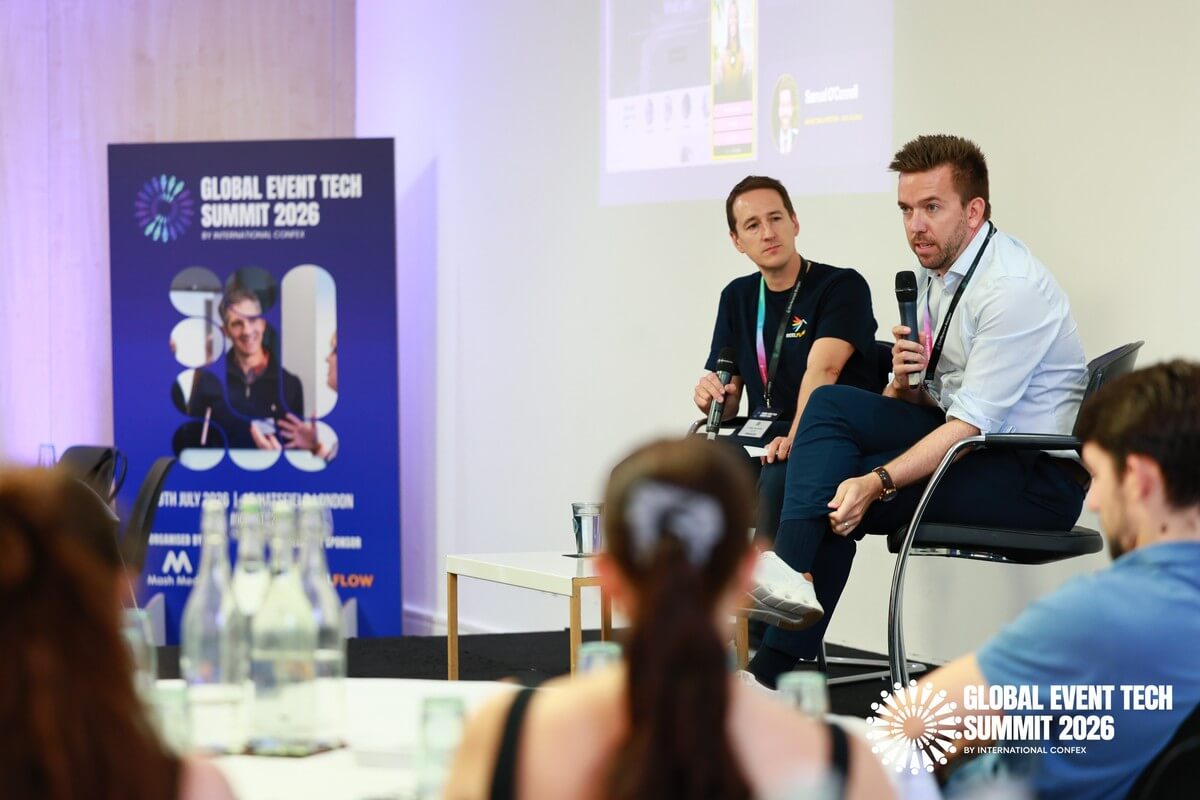
Samuel O’Connell, visual marketing director at Easyfairs, and Chris Wickson argued that organisers need to think beyond simply running a show, they should see themselves as long-term guardians of their communities. Today’s attendees, they noted, often arrive already well-informed, using face-to-face time to validate decisions, build relationships and reconnect with real people.
The takeaway: authentic, human-led video content is helping Easyfairs strengthen engagement across the customer journey. By putting real faces front and centre, on websites, in email campaigns, at every sales touchpoint, organisers can make communications feel more personal, increase engagement, and keep communities connected between events, without losing the spontaneity that makes live experiences valuable.
AI Innovation Showcase: turning AI into practical value
Lucy Postlethwaite, AI consultant expert, led the AI Innovation Showcase, demonstrating how AI is moving from experimentation into practical use across the events industry.
One example showed how AI is transforming exhibition design, turning a written brief into photorealistic stand concepts in minutes. By automating repetitive groundwork, these tools free up designers to spend more time on creative development and less on early-stage concepts.
The session also pointed out that AI adoption depends as much on people as on technology. Many organisations still lack clear policies and training, leaving them exposed to “shadow AI” (unsanctioned tools used without oversight) and data security risks. Establishing governance and equipping teams with the right skills were identified as essential next steps.
The showcase closed with a look at AI-powered event concierge tools, which help attendees discover relevant exhibitors and arrange meetings before they arrive. The wider point: used responsibly, AI can improve efficiency, personalise the experience, and free up event professionals to focus on the work technology cannot replace.
AI-powered event strategy
Dr Baris Onay, co-founder of Precision Communities, examined how AI can support event planning while reinforcing the importance of human expertise.
He introduced the Attend, Sponsor, Own (ASO) framework as an approach to event strategy: attend events to gather market insight, sponsor where target audiences are concentrated, and create your own events to build stronger relationships and shape your brand’s narrative.
Using a custom AI strategy tool as an example, he showed how AI can analyse public information to identify target audiences, map relevant events, and generate a draft strategy. But he was clear about its limits: AI should provide a starting point, with the final strategy shaped by human judgement and business knowledge.
He also flagged the importance of being “machine-readable.” As AI plays a growing role in how events and suppliers are discovered, clear website structures, accessible information and value-led content are becoming increasingly important.
A huge thank you to everyone who took part, sharing time, insight and ideas that will help shape the direction of the industry going forward.