
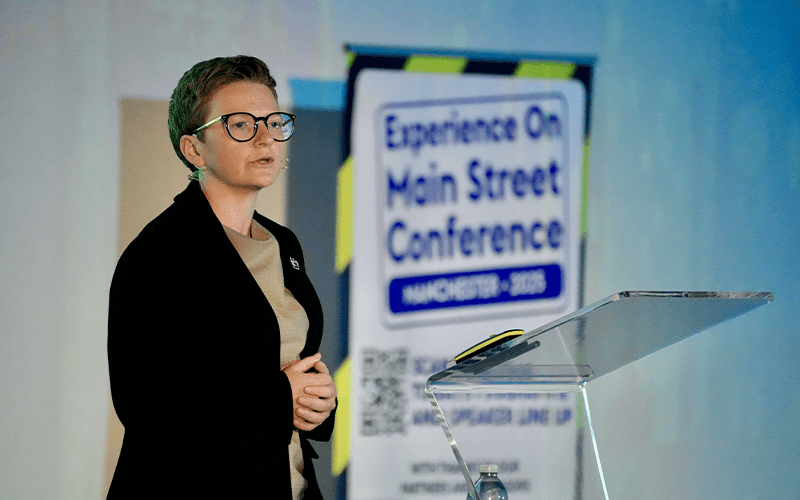
Leaders from the immersive and experience economy gathered in Manchester for the third Experience on Main Street Conference, held 8–9 July 2025 at the Little Lion Entertainment Arcade Arena. CN attended the two-day event, which explored the growing role of experiential thinking in city planning, urban and cultural regeneration, and economic development.
Bringing together over 30 speakers from sectors including urban planning, design, architecture, and leisure, the conference focused on how experience-led approaches can shape the cities of tomorrow.
Manchester’s cultural renaissance driving economic growth
Manchester Councillor Bev Craig opened the event by reflecting on Manchester’s remarkable transformation since hosting the 2002 Commonwealth Games, which she identified as a pivotal moment for city-wide regeneration in the North.
Craig outlined how strategic government initiatives and devolution have attracted substantial investment, most notably securing the largest public arts funding in the UK since the Tate Modern, helping establish Manchester as a national cultural powerhouse.
Now the most visited UK city outside London, Manchester’s rising cultural and social profile was further validated when the BRIT Awards selected it as a host city for the first time. Sustainability emerged as another key pillar of the city’s growth strategy, with green infrastructure and climate-aligned development positioned as central to future planning.
Manchester’s international visitor economy featured prominently throughout the conference, with speakers highlighting the city’s successful diversification beyond its football heritage into immersive and multi-venue experiences. The creative sector currently contributes £9bn annually to the local economy and is projected to reach £15bn by 2030.
Immersive entertainment sector calls for business rate reform
Eddy Hackett, CEO of The Lost Estate, discussed his company’s holistic approach to building immersive experiences that seamlessly blend performance, hospitality, and social gamification to create shared, interactive journeys for audiences.
David Hutchinson, Founder and CEO of The Path Entertainment Group, highlighted the entertainment industry’s shift toward experience led formats, particularly in engaging younger demographics. His company specialises in developing interactive events based on major intellectual properties, responding to growing consumer demand for memorable, participatory entertainment.
Both industry leaders emphasised the need for government support, identifying high business rates as a significant barrier for immersive companies that require physical spaces and investment in new creative intellectual properties. They called for policy reforms to help the sector expand and continue innovating.
Heritage-led regeneration creates community connections
Tourism representatives from Liverpool and Newcastle shared insights into major regeneration projects transforming their cities, with particular focus on Newcastle’s city centre revitalisation of the ex-Debenhams store and Liverpool’s Royal Albert Dock redevelopment.
Both initiatives prioritise enhancing nightlife offerings while creating inclusive community spaces where families can gather, celebrate cultural diversity, and connect with local heritage. The integration of historical identity into contemporary development emerged as a central conference theme.
Additionally, the city’s acknowledgement to its historical links to the slave trade – reflecting a broader commitment to place-based regeneration that centres on honesty, inclusivity, and cultural reflection.
Event summary
Industry leaders from immersive entertainment and city tourism boards highlighted heritage led regeneration projects aimed at creating inclusive, community focused urban spaces. By integrating cultural heritage into city planning, the projects foster stronger connections between people and place encouraging civic pride, boosting footfall, and enhancing the overall vibrancy of public spaces.
The event underscored the experience economy’s growing influence in shaping vibrant, sustainable cities across the UK – particularly in the North, where accelerated devolution is unlocking new opportunities for growth and innovation and placing the key decisions in the hands of local communities.
Emily Smith, head of Conference Programming and event organiser, commented: “Experience on Main Street once again proved to be one of the most exciting venues for exchanging ideas and learning about cutting-edge projects and trends across the placemaking, regeneration and leisure sectors within the experience economy.”
Rupert Daniels from the Department for Business and Trade, a key conference partner, added: “Regenerating the UK’s high streets represents a key government priority, and creative companies play a vital role in this transformation, both domestically and internationally. It was inspiring to hear success stories from Manchester, Newcastle and other cities leading this change.”