
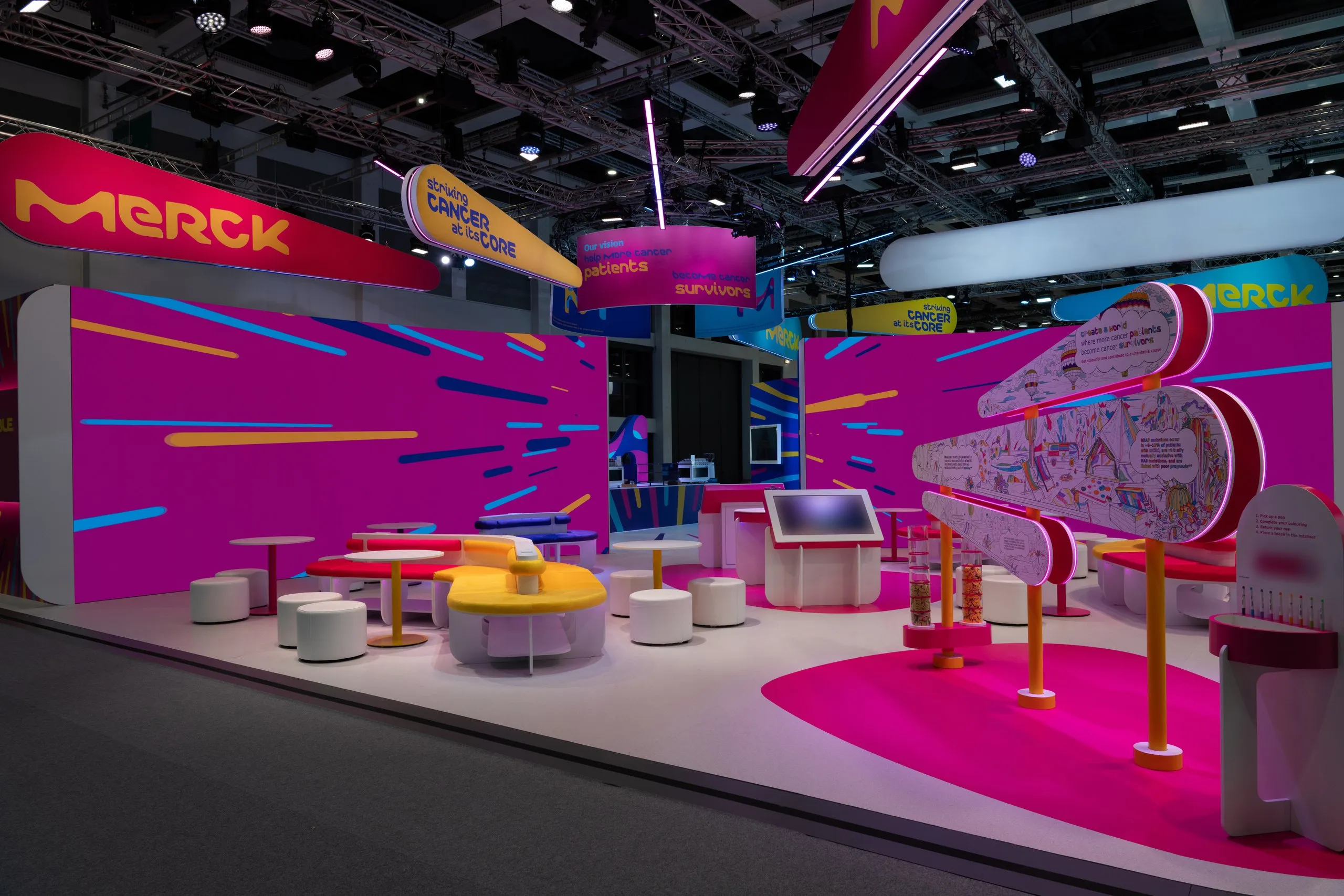
In this series, features and series developer Heather Nicholls takes you behind the scenes of some of the most compelling brand activations and events.
This week we meet Emota, the agency behind Merck’s stand at ESMO 2025.
The Brief:
Emota and Merck came together to design a stand for ESMO, the largest oncology congress in Europe, with a shared ambition: create a presence that could cut through an intensely competitive, scientifically dense environment while evolving beyond a traditional product led exhibition model
Andy Walker, senior creative, Emota, said: “At many medical congresses, product messaging overshadows company identity, with stands crowded by competing claims and fragmented narratives. Historically, Merck had adopted a marketplace approach, with individual product zones and stand-alone messaging. With a growing portfolio and ambitious pipeline, both teams recognised that this model would no longer serve the future vision.”
At the heart of the brief for this event, was Merck Oncology’s overarching ambition: to help transform cancer patients into cancer survivors.
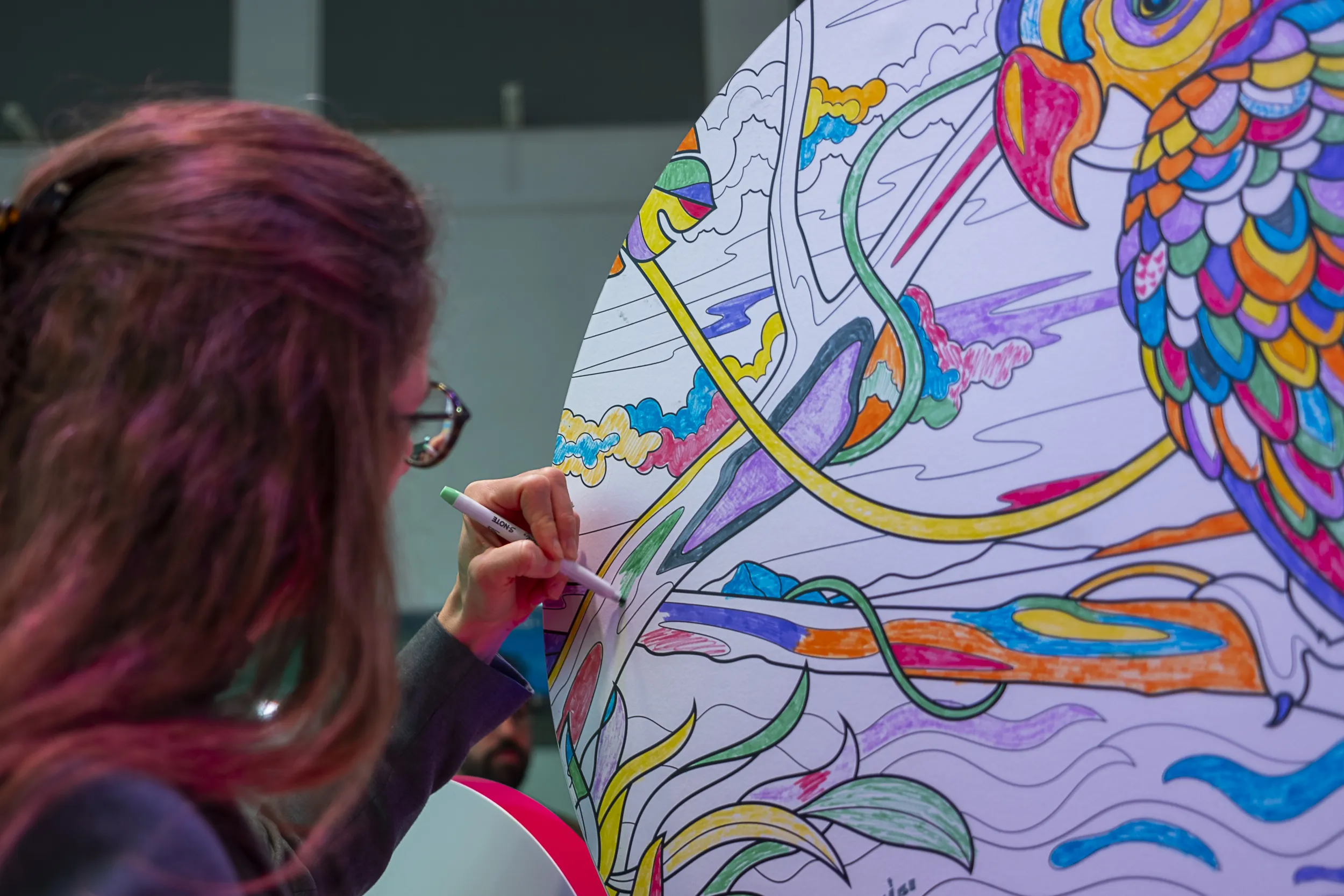
The stand needed to reflect not only scientific leadership, but also humanity. It had to bring to life patient focused messaging, physical engagement and emotional storytelling, while leveraging bold design, strike-led visual language and immersive technology to demonstrate innovation and progress.
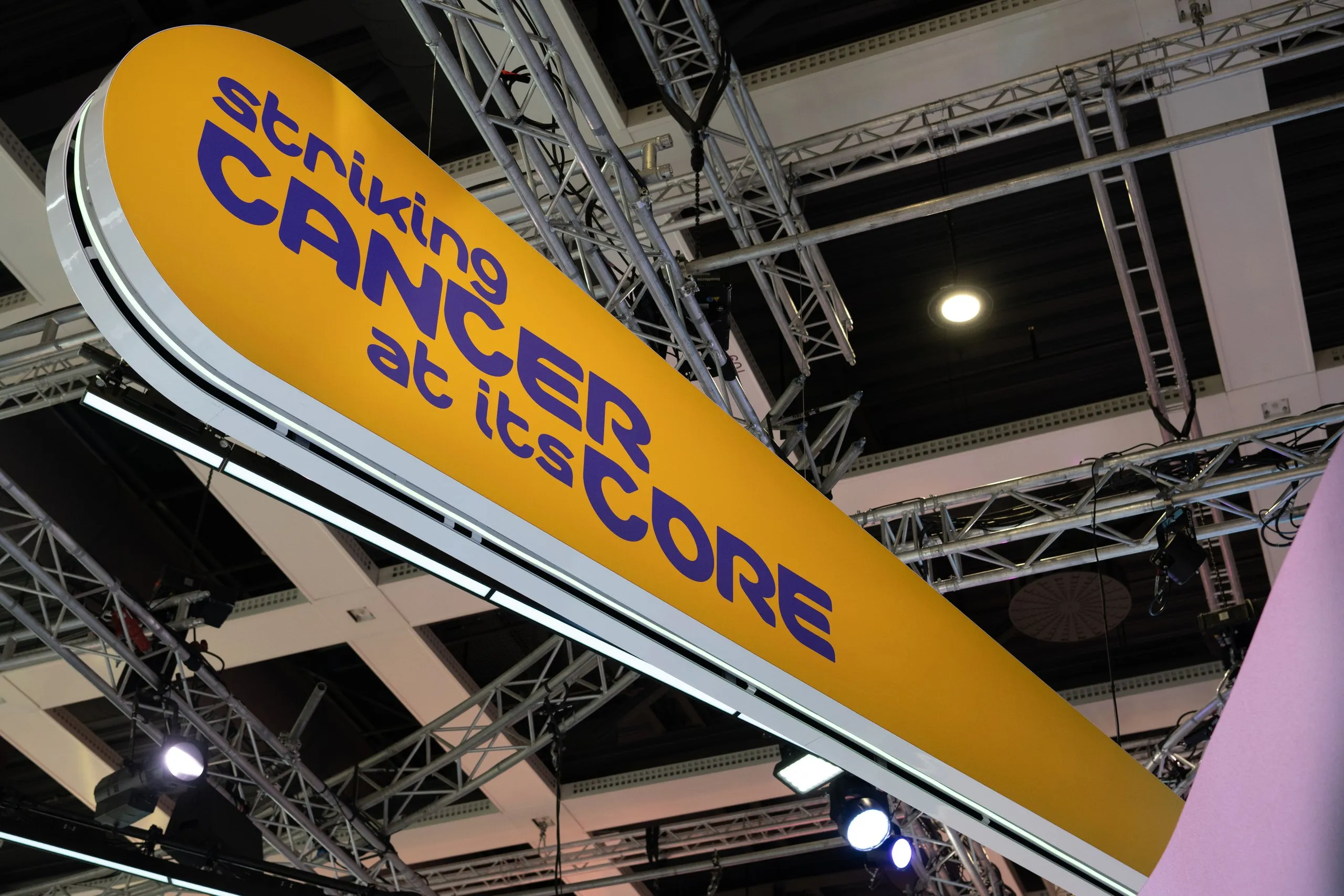
Walker said: “Together, we reframed the brief as an opportunity to shift from product -ed to purpose-led storytelling. Rather than allowing multiple brands to compete for physical prominence, we aligned around a single unifying platform: Striking cancer at its core. Although recently introduced, it had not yet been translated into an exhibition setting.
Walker added: “This required confidence from both teams to commit fully to one organising idea. Together, we translated the platform into an immersive environment where architecture, content and narrative were integrated under a single strategic framework.”
The concept shaped the visual language, content hierarchy and spatial design, ensuring the stand communicated one powerful, cohesive story rather than a collection of competing messages. In doing so, Emota created a space where clarity replaced clutter and where delegates could quickly understand Merck’s broader oncology ambition — its science, its pipeline and its commitment to patients.
The Execution:
The execution journey began with joint alignment around a single powerful idea capable of unifying commercial brands and the full oncology pipeline.
Once Striking cancer at its core was established as the central organising principle, it became the lens for every creative and strategic decision.
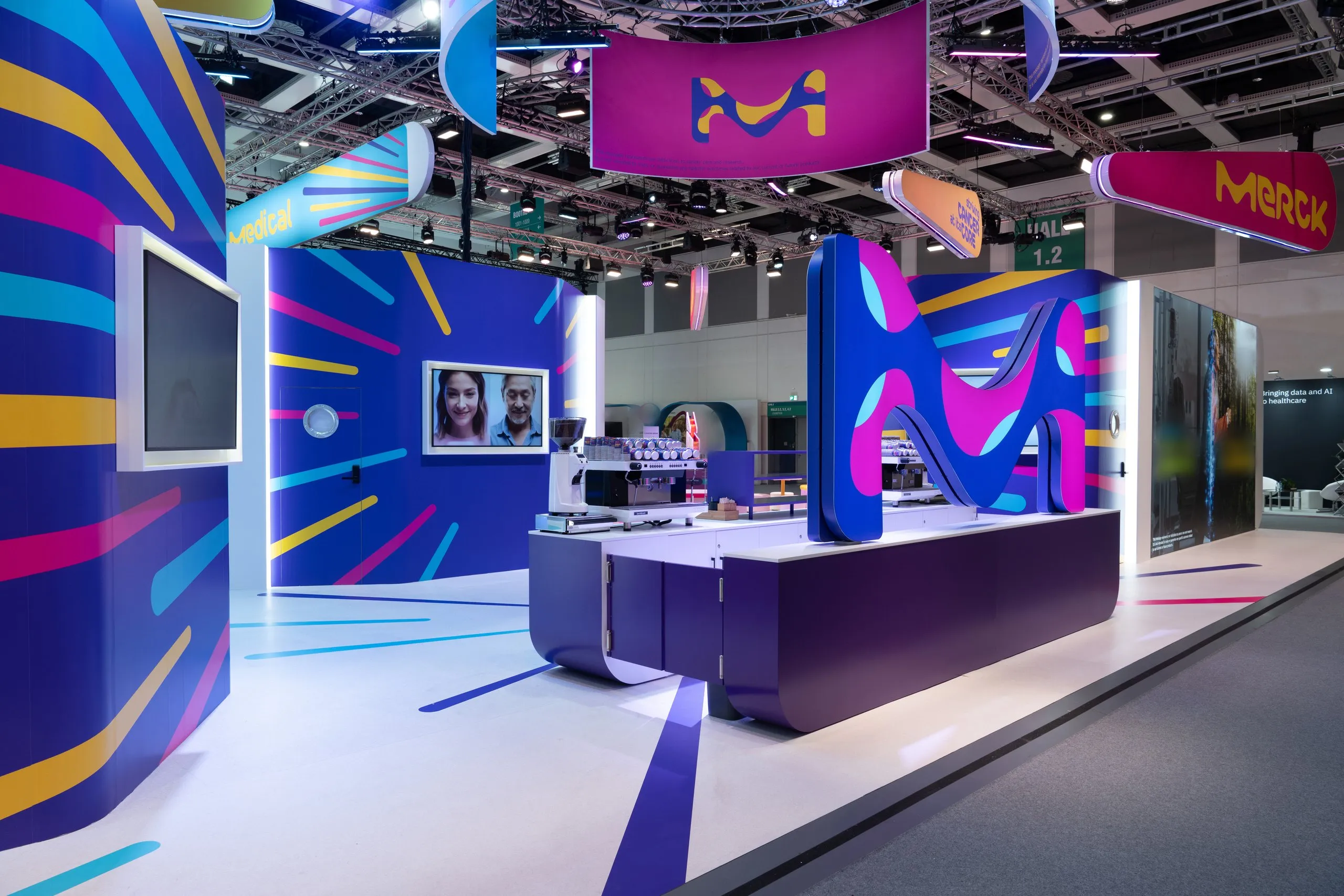
Emota translated the concept into a physical environment structured around a central “core” hospitality space, with connected commercial and medical zones. In parallel, Emota worked closely with Merck’s brand and medical teams to audit, restructure and refine significant volumes of existing content.
Where needed, Emota developed new animation, AI-assisted imagery and bespoke visuals to elevate clarity and impact. This content for the enormous, curved LED screens required months of meticulous planning and coordination. Screen ratios, sightlines, animation timing, lighting and audio were choreographed to work in perfect synchrony, culminating in immersive ‘takeover’ moments that unified the entire stand. Throughout, Striking cancer at its core acted as both creative inspiration and strategic guardrail, ensuring every element reinforced the story rather than competing with it.
Oliver Rogers, director of environments and booth project manager, Emota, said: “This level of integration demanded transparency, agility and mutual trust from both teams at every stage.”
The inspiration for the stand came from a deep understanding of the ESMO environment combined with close collaboration between Emota and Merck’s brand team.
Walker said: “In a setting characterised by scientific intensity and cognitive overload, we aligned around the belief that clarity, confidence and focus would resonate more powerfully than volume. The goal was to be bold but disciplined – visually distinctive while strategically precise”
Creatively, Emota elevated Merck’s existing platform, Striking cancer at its core, and evolved it into a fully experiential language. Working closely together, Merck and Emota transformed an existing baton like brand element into the recurring “strike” motif. This device then became a scalable visual system that could live physically within the architecture and dynamically across screens.
Walker said: “The result was a concept deeply rooted in Merck’s brand but expansive enough to shape the entire experience.”
Rogers said: “Collaboration was foundational to the project’s success.”
Emota and Merck worked as one integrated team, aligning commercial, medical and brand priorities through regular workshops, interactive reviews and open dialogue. Decision making was also shared and success was measured collectively. Oliver Rogers added: “This approach helped build confidence in a new exhibition model and ensured all stakeholders were brought on the journey. Alongside this, close coordination with fabricators, AV specialists and animation partners ensured that the creative ambition was realised with operational precision. The strength of the outcome reflected the strength of the partnership.”
The biggest challenge for Emota when producing this stand was managing complexity. Oliver Rogers explains: “. Multiple brands, an expanding pipeline and high internal expectations had to coexist within a single physical space. We addressed this together by committing to a disciplined narrative hierarchy. The unifying concept provided a shared decision-making framework that enabled us to prioritise relevance, remove duplication and avoid fragmentation. By holding firmly to the central idea, every design and content choice could be evaluated against the same strategic benchmark.”
The Results:
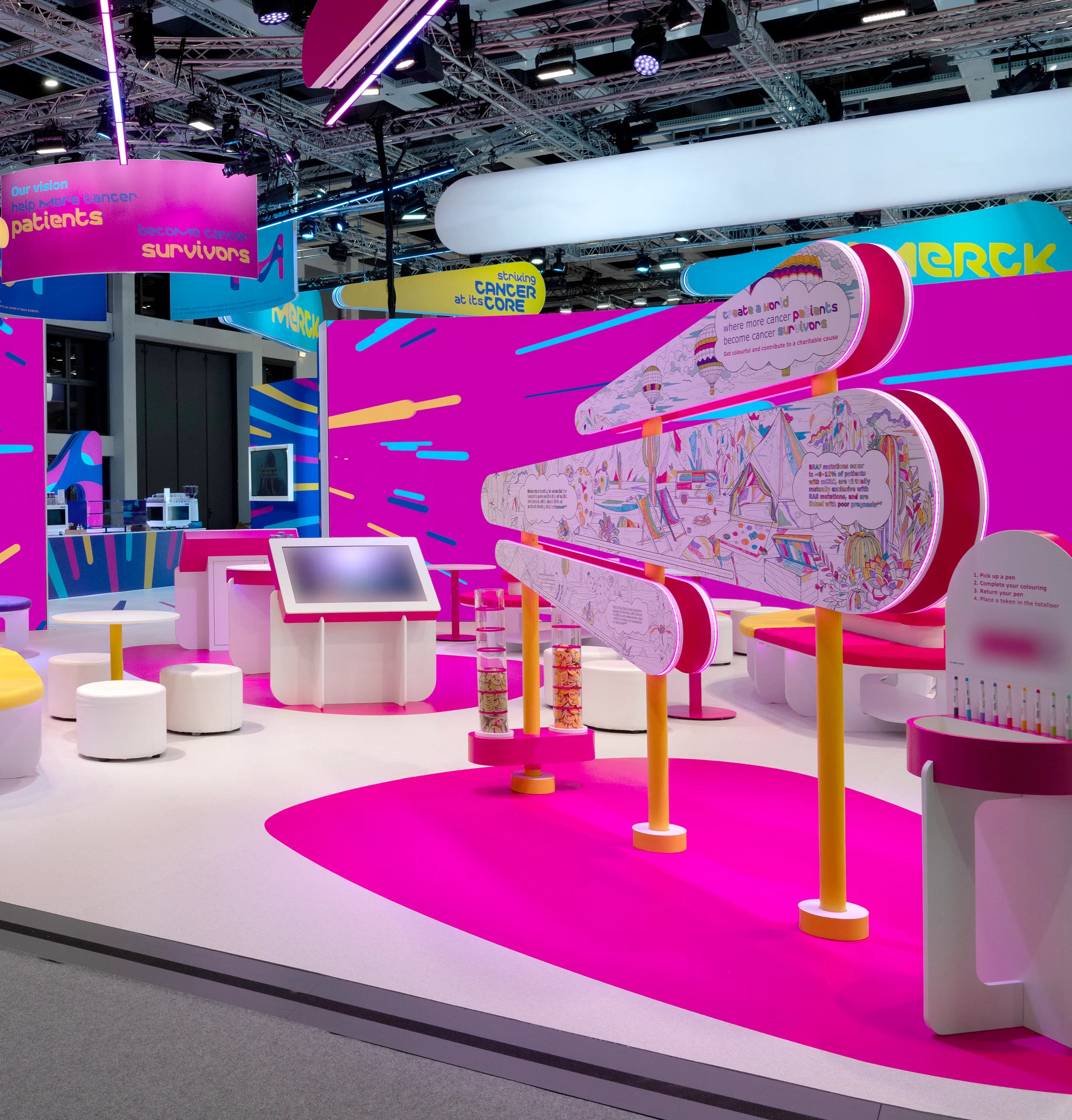
The stand welcomed 8,800 unique visitors and converted 95% of passers-by into stand visitors. Badge scans increased by 250% compared with ESMO 2024, signalling deeper and more purposeful engagement.
Beyond the quantitative impact, the activation elevated overall brand perception and created a platform for richer, strategically aligned conversations with key stakeholders. Andy Walker said: “The results reflected not only strong creative execution, but also close strategic alignment between teams.”
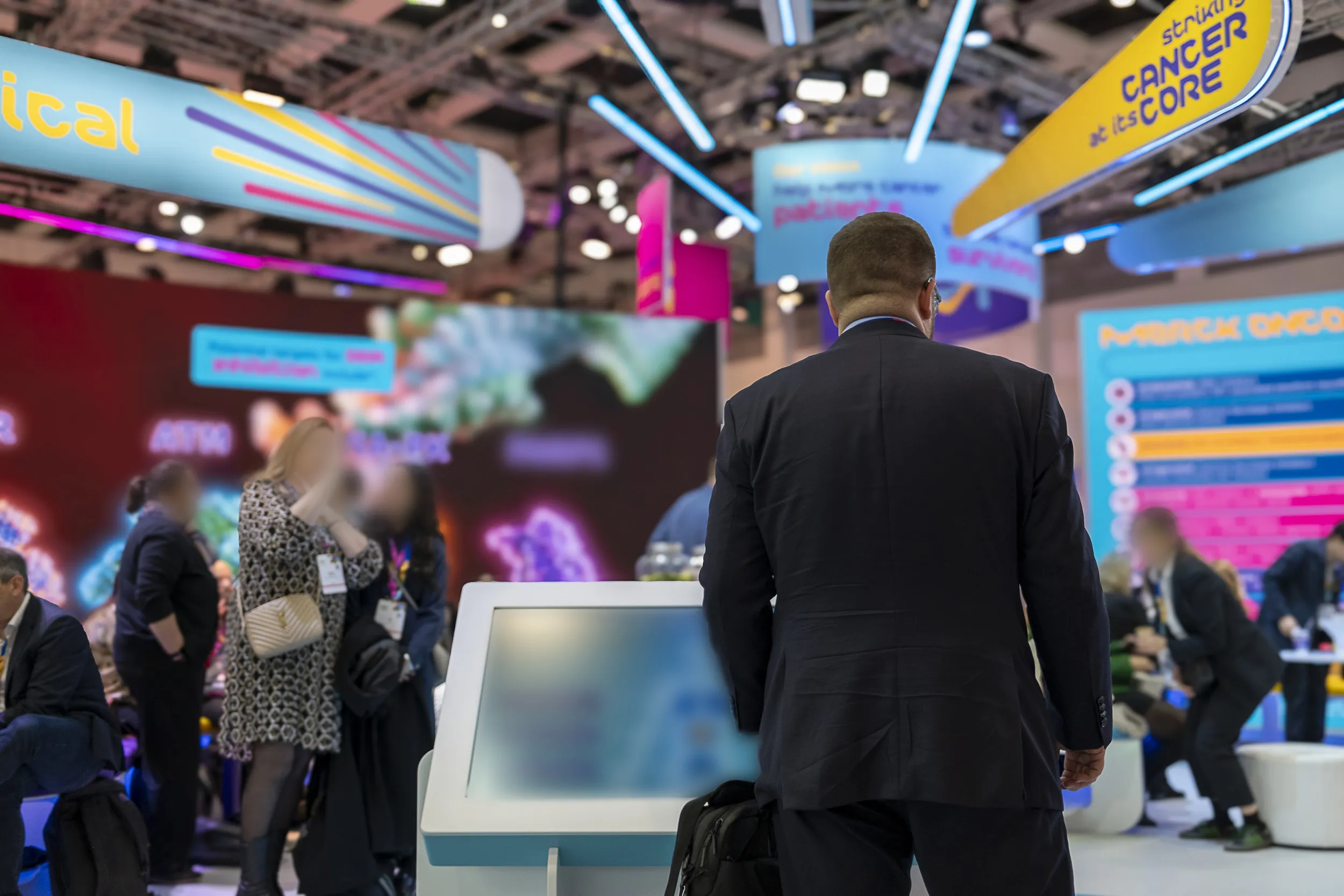
The feedback from the client and attendees was also overwhelmingly positive. Attendees described the stand as confident, refreshing and notably clear within a visually crowded environment. Many commented on how intuitive it felt to navigate and absorb the story without feeling overwhelmed.
Leadership feedback reinforced that the decision to commit to a single organising message had been the right strategic move. The strength of engagement and the quality of dialogue were frequently highlighted as defining successes.
Trends and Learnings:
Rogers said: “This project reaffirmed for both teams the power of a strong, singular message in complex exhibition environments. Clarity creates impact.”
Walker added: “When one idea consistently shapes architecture, content and experience, it unlocks deeper engagement and stronger recall. The collaboration also demonstrated that bold brand expression, when grounded in strategic discipline, can become a powerful differentiator. And, above all, don’t be afraid to liberally splash your stand with pink.”
In terms of trends, Andy Walker outlined that Emota is seeing a clear move towards fewer messages, richer experiences and narrative-led design. Oliver Rogers said: “Audiences want depth, relevance and authenticity. This activation embraced those shifts by rejecting clutter, embracing a single organising concept and using technology to amplify a story, rather than distract from it.”