

Women make up 77% of the global events workforce, yet hold only 16% of leadership roles. The imbalance is well known, but the women driving this industry forward are still too often overlooked.
The 70% is a weekly series dedicated to changing that. Each instalment profiles a woman whose work, insight, and ambition shape the events sector – from emerging talent to established leaders. Through their stories, we explore the pathways, challenges, and perspectives defining what leadership looks like today.
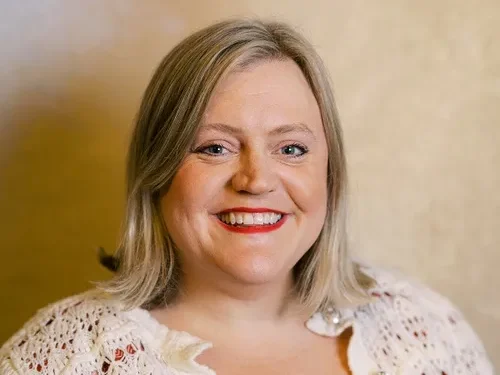
This week, we meet Catherine Owen, head of sales and marketing, The British Academy at {10-11} Carlton House Terrace.
How many years have you been in the events industry?
16 years
How do you balance professional growth with personal commitments and do you think the industry is evolving in terms of work life balance?
I’m still working on it, if I’m honest. The industry has a habit of convincing you that everything is urgent, and after sixteen years, I’ve learnt that very little actually is. The building won’t spontaneously combust because someone wants a different canapé.
I’ve become much better at protecting my time, taking annual leave without apologising for it, and recognising that burnout isn’t a badge of honour. Therapy has helped. So has getting older.
I do think the industry is improving. There is much more openness around flexible working, mental health and the fact that people have lives outside of their jobs. That said, there is still a lingering culture that celebrates being constantly available. I’d like us to become an industry that values sustainable careers rather than exhausted people.
How do you see the events industry evolving in terms of diversity, equity and inclusion?
We’ve made progress, but I think we’re moving beyond simply asking whether there is diversity in the room and towards asking who has influence once they’re there.
The events industry is full of creative, talented people from all sorts of backgrounds, but leadership still doesn’t always reflect that. Diversity cannot just sit in recruitment or on conference panels. It has to be visible in who makes decisions, who controls budgets and whose ideas shape organisations.
As someone working in a venue connected to scholarship and public engagement, I also think accessibility should never be an afterthought. Good events and professional opportunities in this industry are for everyone, not just the people who have always felt welcome in those spaces.
What advice would you give to young women looking to enter and succeed in the events industry?
Don’t sacrifice your values, your self worth or your wellbeing for your career.
This is a brilliant industry because we create moments that bring people together. We celebrate ideas, achievements and human connection, and there is something genuinely joyful about that. It’s also demanding, image conscious and often high pressure. There will always be another event. There is only one you.
Find mentors who encourage rather than compete with you. Learn to say no without feeling guilty. Be kind, because this industry has a long memory, but don’t confuse kindness with allowing people to take advantage of you. And remember that confidence isn’t something you’re born with. Most of us are just making educated guesses while smiling convincingly.
How do you handle setbacks and failures?
With humour, first of all. If you work in events and can’t occasionally laugh at the absurdity of your day, you’re making life much harder than it needs to be.
I also talk about them. Friends, colleagues and therapy have all taught me that setbacks become much less frightening when they’re shared rather than carried around internally. Most failures are opportunities to learn something useful, even if they don’t feel like it at the time. I try to keep perspective. Very few mistakes define your career, but how you respond to them often does.
What changes do you think are still needed to create more opportunities for women in leadership?
We need more women in senior leadership, but we also need to be honest about which women are getting those opportunities.
Real progress has to be intersectional. Queer women, trans women, disabled women and women of colour continue to face barriers that many of us don’t. If leadership simply becomes more representative of people who already look like me, we’ve missed the point. Leadership isn’t just about getting a seat at the table. It’s about making sure you’re not pulling the ladder up behind you when you get there.
I think those of us with privilege have a responsibility to use it well. That means sponsoring talented people, advocating for colleagues when they’re not in the room, and sometimes stepping back so that other voices can be heard. The strongest leadership isn’t about speaking the loudest. It’s about creating space for others to lead too.