

The Live Recruitment Diversity Report 2026 has been released today (1 April 2026), in line with diversity month.
The report provides updated insight into diversity, equity and inclusion across the UK events industry, drawing on data from over 48,000 professionals.
Age:
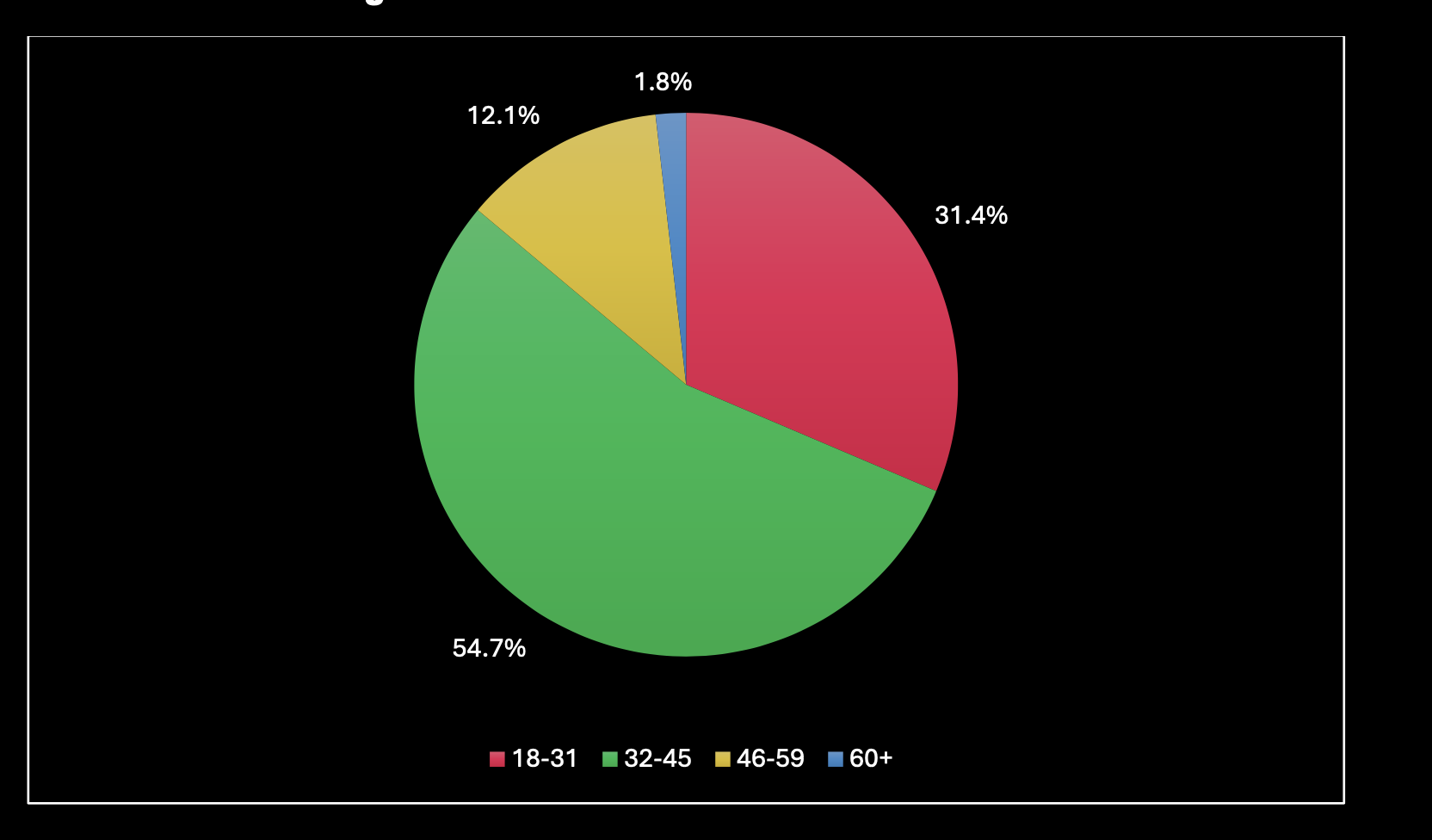
One of the main findings of the report, is that the events industry’s workforce is ageing.
Younger talent is declining, with the proportion of professionals aged 18-31 dropping 6% since 2025, while the 32-45 group now dominates at 54.7%.
Speaking on this, Laura Kelly managing director said: “With more people working later in life, this may suggest challenges around retention, career progression, or recruitment of more experienced professionals within the sector.”
She added: “In addition to this, the 18-31 category has faced quite a rapid decrease showing that the entry routes into the industry haven’t picked up or made any core changes as of yet. The efforts being made within the industry are likely to take some time to affect the wider industry and impact the new cohort of juniors but could we be doing more?”
Gender:
The report shows that the gender imbalance persists at senior level despite the workforce being majority female.
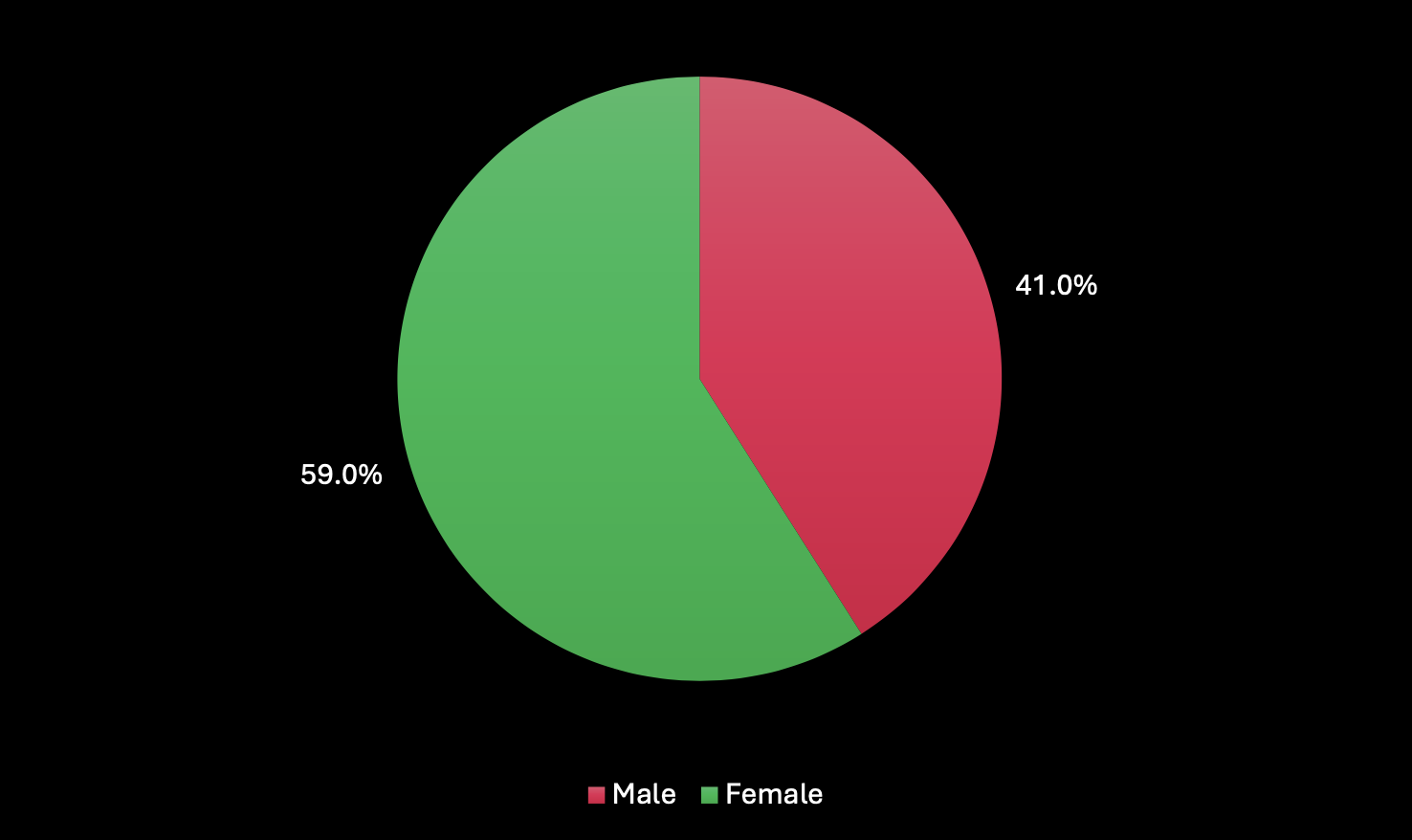
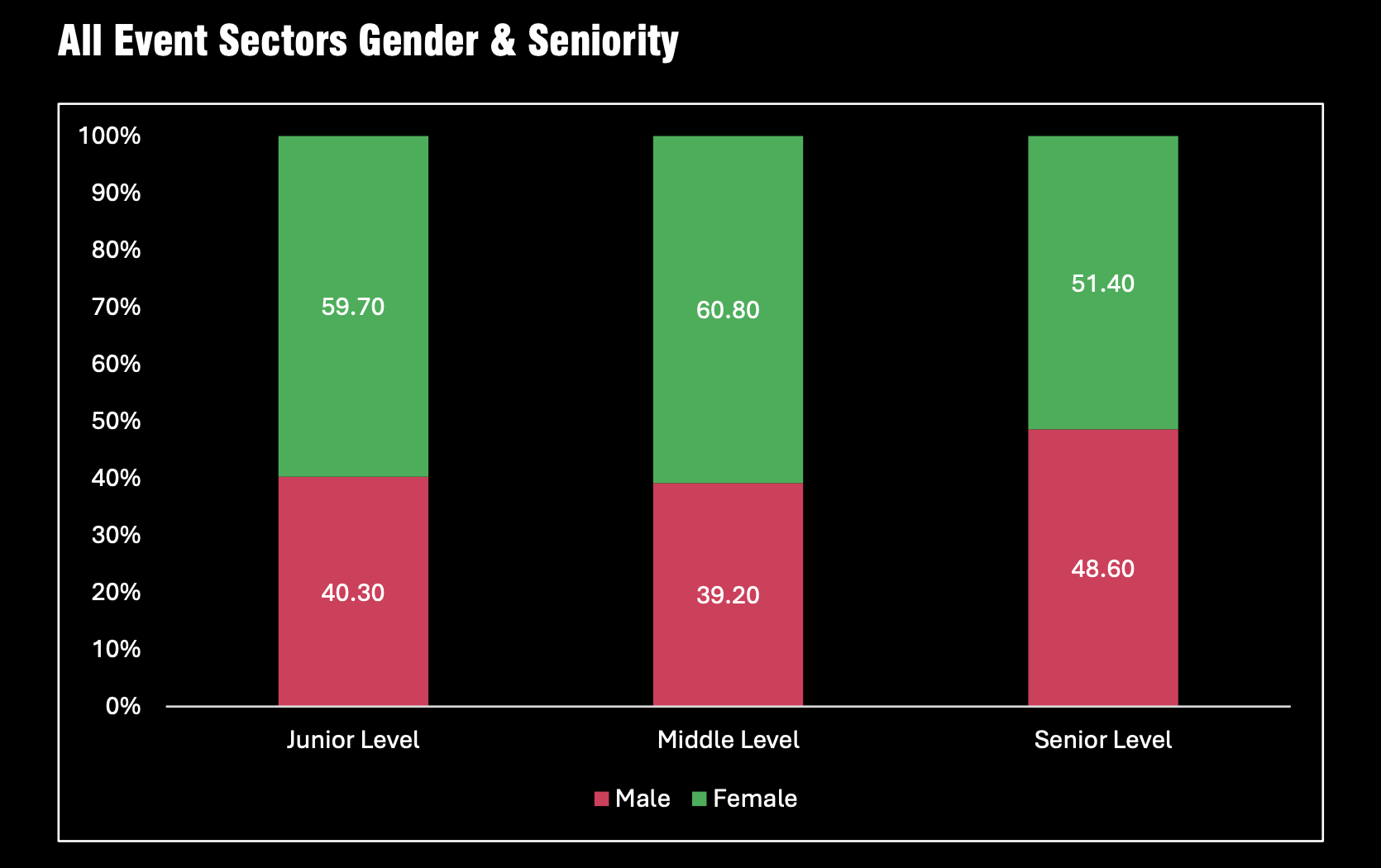
Women make up 59% of the events workforce, yet representation drops at senior level, where men increase disproportionately.
The gender pay gap also remains significant across the industry, with male event professionals earning on average approximately £4,000 more than female counterparts with higher salary expectations also evident.
Kelly said: “When looking more closely at individual sectors, additional nuances emerge. Within the Conference and Exhibition Organiser space, male salary ranges are notably wider than those of their female counterparts. This may in part reflect the structure of sales roles within this sector, which tend to be more proactive and commercially driven, and have historically attracted a higher proportion of male professionals compared to more reactive sales environments such as venues. This dynamic may also contribute to the significant gender pay disparity seen in this sector – particularly notable given that females make up a higher proportion of the workforce here, exceeding the overall industry average.
Ethnicity:
The report has found that the events industry is more ethnically diverse than the UK average, but gaps remain. 25.4% of professionals identify as ethnically diverse, compared to about 18% of the UK population, yet this does not translate into equal pay of progression.
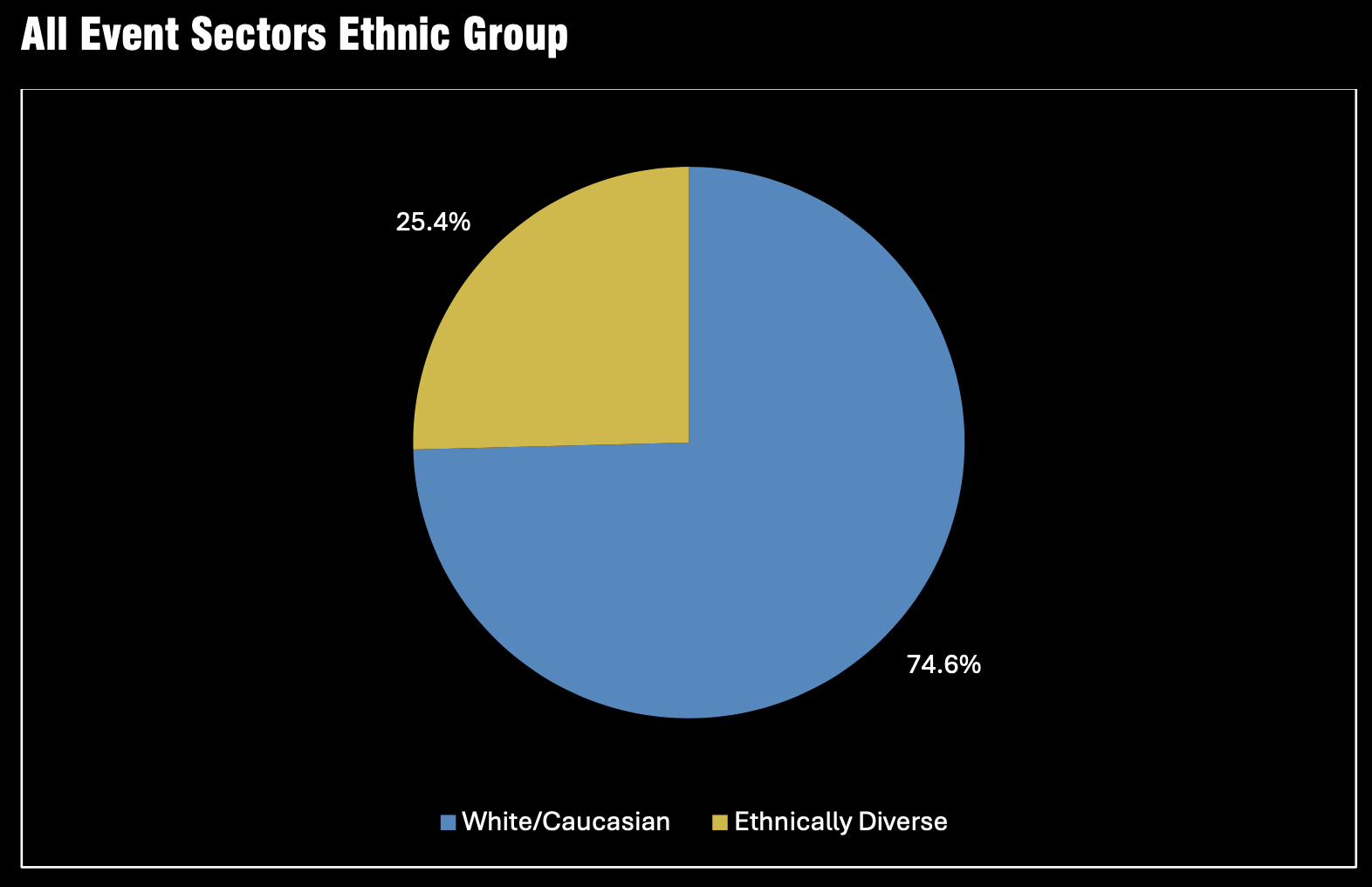
The report found that the ethnicity pay disparity continues across all sectors, with White/Caucasian professionals earn more on average, as well as having higher salary expectations when compared to ethnically diverse professionals.
Event industry demographic insights:
This year, an event industry demographic insights section has been added to the report, expanding coverage to include disability, sexual orientation, religion and caring responsibilities.
This research found that 7% of respondents identify as having a disability, a figure which is below the UK working-age benchmark of 23%.
LGBTQ+ representation, however, was recorded at levels higher than national averages, with 6.9% identifying as bisexual and 3.8% as gay or lesbian, compared to UK benchmarks of 1.6% and 2.1% respectively.
Finally, the report suggested the events industry may offer higher levels of social mobility than other professional sectors. Data showed that 42% of event professionals were the first in their family to attend university, while 29.9% were second-generation graduates.
Kelly said: “Despite these challenges, the report highlights that the events industry demonstrates comparatively strong representation in several areas when viewed alongside other sectors. Increasing industry awareness of diversity, equity and inclusion – alongside greater transparency in reporting – suggests positive momentum for future progress.”
She added: “By building a deeper understanding of the workforce, the industry can continue working towards more equitable and inclusive career opportunities for everyone.”
Read the full report here.