

Sport is increasingly becoming a vital currency within the experiential market. Full-service live events agency Identity has recently opened a specialised sports division based in Dubai, whilst other agencies have noted that they are seeing it become a trend.
In this feature, we spoke to Mike Linford, partnership manager at asembl.group, Simon Dunnell, director of major projects at Identity, Helen Wright, strategy director of major projects at Identity, and Andrew Marshall, partnerships director at Sleek Events about the rising trend of experiential within sports.




What’s happening?
Marshall says: “If you’re working in events or brand experiences right now, it’s impossible to miss what’s happening in sport. The scale of investment alone tells the story.”
He cites the example of McLaren announcing Mastercard as the official naming partner of its Formula One team from 2025 in a deal understood to be worth around $100 million per season.
He adds: “What we’re seeing on briefs is a very clear shift. First, traditional advertising is struggling to cut through, while live sport still delivers big, genuinely engaged audiences. Second, the ROI conversation has changed. Brands now expect to measure engagement, data capture and commercial impact, not just visibility. And third, sport has evolved into a cultural platform. It’s no longer just about the match or the race, it’s about the fans and the wider moment around it.”
“For the clients we work with, collectively investing tens of millions into sport, the appeal is simple. You get scale, emotion and measurable outcomes in one place. Sport has moved from being faith-based marketing to performance marketing, wrapped in experience.”
Why sport?
Sport offers something unique: a bought-in, captivated and engaged audience.
Dunnell explains: “Sport has something very few platforms can offer now: real emotional permission. Fans actively choose to be there, they’re invested, and they care deeply about the outcome. That level of attention and loyalty is incredibly rare.”
He adds: “For brands, sport is a cultural amplifier rather than a backdrop. When it’s done well, it creates association, meaning and memory that lasts far beyond the event itself. That’s why it’s becoming a pillar, not a bolt-on.”
Linford points to the Australian Open as a useful example of why he thinks sport is becoming such a valuable currency within the experiential market. Unlike many other live entertainment formats, major sporting events place audiences in a heightened emotional state, where the outcome is unknown and the stakes feel personal.
Fans arrive not knowing whether they will witness an upset, a historic win, or their favourite player fall short. He compares this to a music festival, where attendees typically follow a packed schedule, moving quickly between stages to see specific artists. They know they are going to see and experience their favourite artists performing their favourite music.

As Linford explains: “Every minute of that sort of festival experience is packed.”
Sport, by contrast, naturally has longer periods of dwell time. Fans often arrive hours before the event to avoid traffic, spend time in the venue beforehand, and experience further pauses during breaks in play.
Linford notes: “At sport events you have a lot more dwell time. You’ve got these periods of time where nothing’s being filled, and you can be there for about six to eight hours.”
For brands and sponsors, this combination of emotional engagement and extended dwell time creates a powerful opportunity. With fans already immersed in the experience and moments where attention isn’t fully occupied by the action itself, audiences become more receptive to messaging.
As Linford puts it, this environment makes it “a perfect opportunity” for sponsors, particularly those aligned with athletes or teams, to connect with fans while their emotional investment in the event is at its peak.
He says: “The emotional state and the dwell time are definitely the sort of peak experience that brands are looking for at the moment.”
He adds: “Brands are noticing now that it’s not about taking away from the overall experience. It’s how do we elevate the overall experience? We’ve got people here who are highly emotional, wanting to be entertained, and who are kind of bored in this time pre-game or at half-time. So it’s a perfect plug-in for them.”
Why is this shift happening?
Speaking on the launch of Identity Sport, Dunnell explains that it was because of a pattern that the agency could no longer ignore.
He said: “What became clear was that sport demands a very particular blend of skills. You can’t treat it like a normal brand event, and you can’t treat it like a standalone spectacle either. Identity Sport is really about recognising that maturity, pulling together work we were already doing at the highest level and giving it a clearer focus and language.”
Helen Wright, strategy director of major projects at Identity, explains that now was the right time to open the division because a few things have converged.
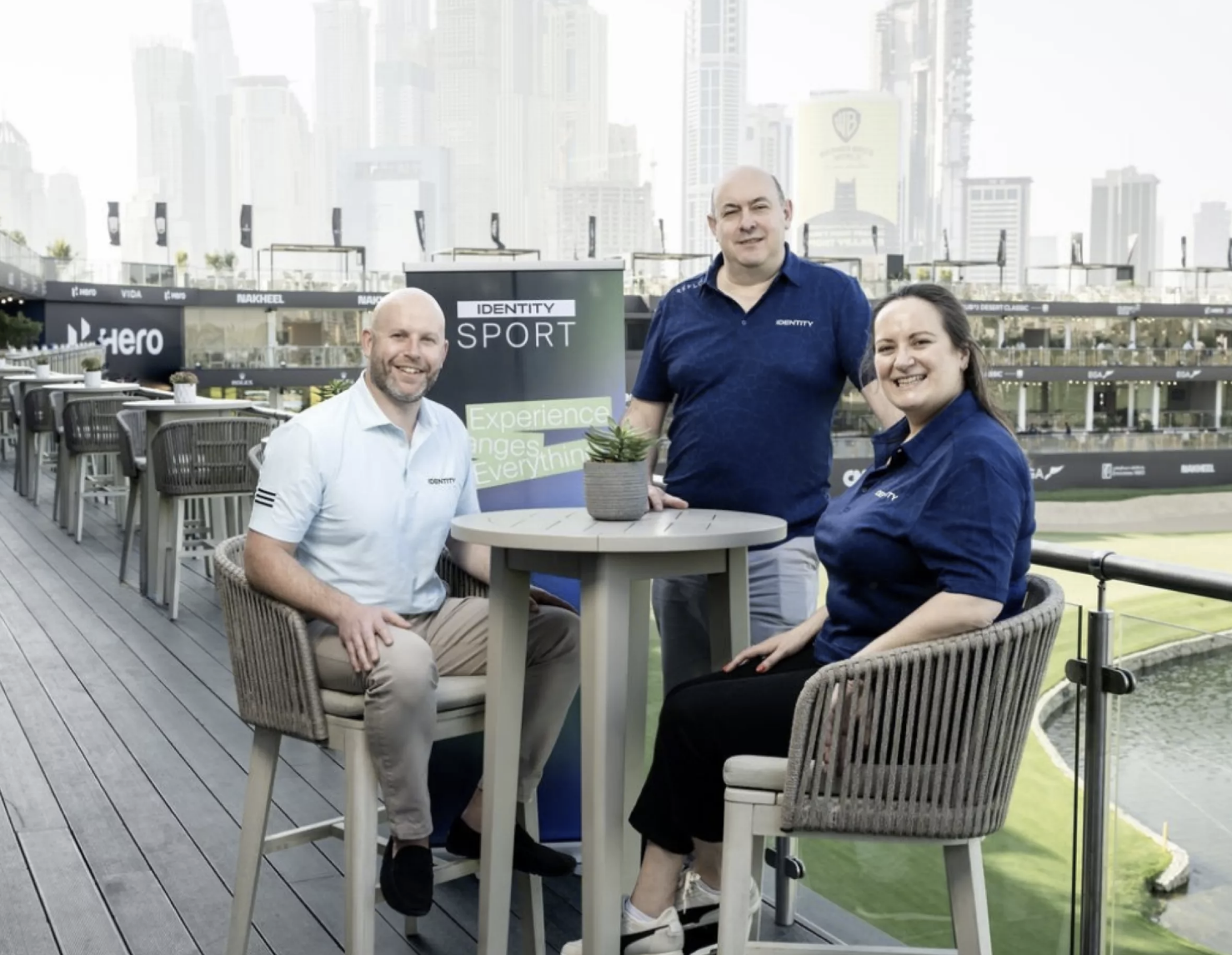
She said: “Fan expectations have risen dramatically, budgets are tighter, and the tolerance for risk has dropped. At the same time, sport has become more commercially complex — more partners, more platforms, more pressure to deliver value beyond the stadium.”
She adds: “Creativity alone isn’t enough anymore, but neither is operational excellence on its own. What’s shifted is the need to design experience as a system from the outset. That’s where we felt the market was ready — and frankly asking — for a more integrated approach.”
She also explains that audiences have changed and people are more selective about where they spend their time and attention.
She adds: “Sport still cuts through in a way very few things do, but only if the experience respects the fan and the moment. At the same time, organisers and partners are under more scrutiny than ever. Experience now sits at the intersection of reputation, revenue and risk. That makes it a strategic issue, not a creative afterthought.”
Marshall also says: “Having delivered both standalone brand events and sport-led activations, the difference is pretty stark. Sport consistently outperforms in three areas — scale, emotional context and data capture.”
Marshall argues that what has truly accelerated this shift is the growing importance of data. Brands are no longer activating in sport purely to raise awareness; instead, they are integrating live experiences into wider CRM systems, personalisation strategies and lead-generation frameworks.
In some cases, a single tournament can generate thousands of qualified leads, demonstrating the tangible commercial value of these activations. As a result, budgets are increasingly shifting away from purely digital campaigns and into sport-led experiential programmes that offer both engagement and measurable outcomes.
How can brands get it right?
Linford shares how it is vital for brands to ensure that experiential activations genuinely add value to the relationship between fans and the sport, rather than just feeling like an extra, over-commercialised aspect of the event.
He says: “We always tell brands not to sell out just for the sake of going to an event.”
He explains that a brand activating at a sports event should follow a reciprocal journey.
He says: “The reciprocal journey in the eyes of the fan is: I’ve come to this event. What else could be added to this day which would increase my engagement or enjoyment of the day?”
Brands therefore need to be genuine and relevant to the event. Linford again uses the example of the Australian Open, citing how fans arrive at that event with excitement and energy.
If a brand were to interrupt these feelings by trying to sell something unrelated, such as life insurance, it shows that they have misunderstood the event.
He says: “That brand has really not understood the event. They’ve tried to activate but they are not giving anything back to the audience.”
He continues: “Flip that on its head and it’s a brand like Red Bull. I’m at the Australian Open, I’m full of energy, heading to the main court and someone gives me an energy drink. I’m going to think I absolutely love this energy drink. So when I’m sat down watching the tennis for a while, I want to carry on this peak journey. I want to be at this level of energy. And it’s a nice, cold, refreshing beverage. That’s something where you’re adding into people’s overall experience. So it’s understanding the fan journey and what people are going to need out of that day as well.”
The future of experiential and sport
Looking ahead, industry leaders believe the relationship between sport and experiential marketing will only deepen as brands move towards longer-term partnerships and more integrated fan engagement strategies. Marshall notes that he expects sport to become a core pillar of brand experiential strategies.
He said: “The direction of travel is clear. Multi-year partnerships and a packed global sporting calendar point to sport becoming a strategic platform rather than a tactical add-on.”
He added that at Sleek they are increasingly being brought in to help clients translate long-term sponsorship rights into live experiences, city activations and measurable engagement that sit within wider brand ecosystems.
“Agencies that can combine creativity, compliance, data and delivery will shape the next era of sports experiential.”