

Women make up 77% of the global events workforce, yet hold only 16% of leadership roles. The imbalance is well known, but the women driving this industry forward are still too often overlooked.
The 70% is a weekly series dedicated to changing that. Each instalment profiles a woman whose work, insight, and ambition shape the events sector – from emerging talent to established leaders. Through their stories, we explore the pathways, challenges, and perspectives defining what leadership looks like today.
In this weeks edition, we meet Grace Louisy, managing director at HeadBox.
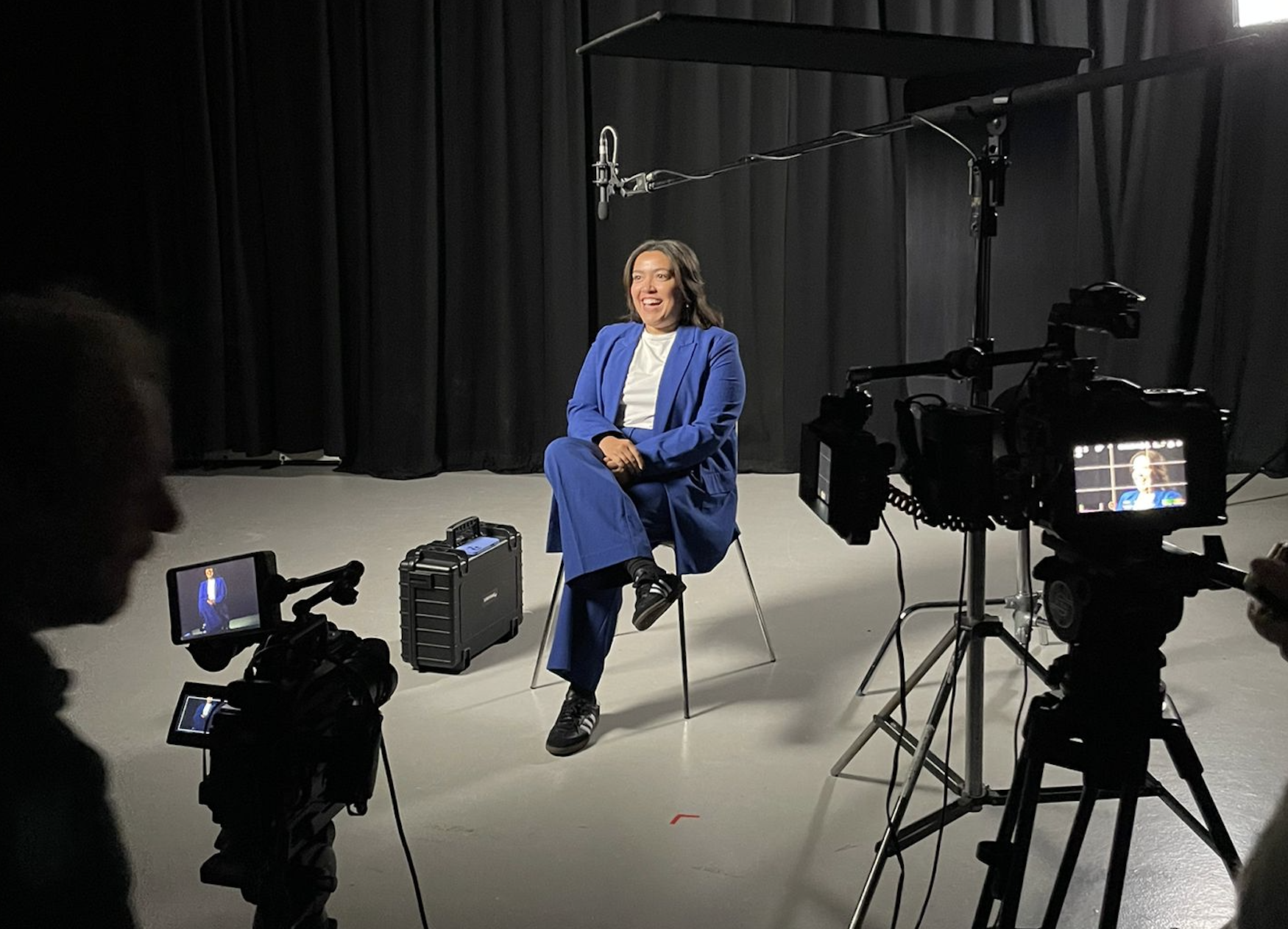
How many years have you been in the events industry?
I’ve been in the industry for eight years now. Which, compared with most leaders, feels like a short time. Considering the steep learning curve I’ve been on, it feels like I’ve gained a lifetime’s worth of experience, yet there’s always more to learn.
I can still remember attending my first industry event: I was instantly hooked by the buzz, the energy, the people and the industry. For me, it’s true that once you’re in the events industry, you never want to leave.
How do you balance professional growth with personal commitments, and do you think the industry is evolving in terms of work-life balance?
Victoria Prew, CEO of HURR, recently wrote a newsletter on this age-old topic. The way I see it, we’re in a constant flux between work, life, and everything in between. I no longer seek ‘balance’, now, I accept that there will be differing priorities at any one time. I respond to those priorities, and I try not to feel guilty for it.
I’m an avid consumer of content created by successful women. I enjoy podcasts, books and newsletters. Across all these mediums, one thing stands out: successful women are constantly prioritising, not trying to do everything, but remaining hyper-focused on the projects that will drive them forward. This year, I’ve dedicated time to consuming content that helps me balance the priorities of work, relationships, health, travel and everything that’s important to me.
In our industry, it’s easy to prioritise delivering events or meeting a client’s needs over health, sleep, and nutrition. In the past, the ‘work hard, play hard’ culture may have been the aspiration, but today, I’m seeing a whole new wave of leaders who know their needs and their non-negotiables for optimum performance, and they work hard to retain these.
Personally, I have bouts of insomnia, and I know I work at my best when I’ve had a good night’s sleep. I’m a better communicator, listener and leader. Even if I’m in a super busy period with work, I know the minimum sleep I need to perform and I don’t compromise on this. It’s not about always finishing work on time or not responding to emails on weekends; it’s knowing your body and your brain and what works for you.
There are many ways to be successful without burning out. It’s easier said than done, but if you can set simple rules and make small changes, you’ll be able to keep these habits. A few years ago, I read Atomic Habits and I’ve never looked back. And if you don’t have the opportunity to prioritise your basic needs at work, you have to ask yourself: is it the right company or role for you?
How do you see the events industry evolving in terms of diversity, equity and inclusion?
Honestly, we’ve made some ground, but we still have a long way to go. I’ve been to some fantastic events where it’s clear the organiser genuinely cares about DE&I. I leave these events feeling empowered, uplifted and positive about the future. Then, I’ll go to a conference where I’m the only speaker who’s a woman of colour over the entire two-day programme; utterly uninspiring.
So much of this relies on the organiser, which is immense pressure on event planners to deliver DE&I objectives with limited resources and competing priorities. I know brilliant leaders in DE&I, but they can’t do it all. It’s not the sole responsibility of a handful of leaders of colour to evolve this industry; it’s down to every person to both demand and deliver more.
Diversity, equity and inclusion are not quick fixes, nor are they novelties that can be tacked on to an event, like an open bar. They are systemic fixes to systemic problems. It takes a long time and a lot of work to enact change. The results, when they finally happen, are immensely impactful to minority voices. I don’t want anyone to walk into an event and feel like they don’t belong, because I know how awful that feeling can be.
What advice would you give to young women looking to enter and succeed in the events industry?
The best advice I’ve ever received is “ask for it”. Ask for opportunities, ask for advice, ask to attend events, ask to shadow projects, ask for a mentor. And please, womankind, ask for more money.
Curiosity is a catalyst for success. The most successful people ask questions, consistently learn and build their skillset. There is so much to learn and experience in our industry, so why not take every opportunity that comes your way? The more roles you have, the more you realise that all those extra projects, extra reading, extra skills you’ve picked up along the way become useful.
I’m inherently nosy about everything and everyone, and I think it’s this nosiness that has gotten me to where I am today. If you’re not the smartest, the boldest or the most creative, make yourself the most useful.
Speaking of useful, the most useful thing I’ve found in my career is my network. Emma Grede, CEO of Good American, said on her podcast recently that a network should bring you four things: learning, access, perspective and belief in yourself. I couldn’t agree more. I’m so lucky to have had mentors, friends and advisors who have done all of this and more. It starts with a simple message on LinkedIn, a coffee or a call, and it can transform into something really powerful.
My three pieces of advice: ask for it, make yourself useful and build a powerful network.
How do you handle setbacks and failures?
There’s no innovation without failure.
If you’re a curious person, you get very comfortable with not knowing things and not getting it right every time. It’s the analogy of one-way door and two-way door decisions. Although the fixable, two-way door decisions require urgency and logic, it’s the irreversible one-way door decisions that good leaders spend the most time on. Good leaders understand that tough decision-making, risk and failure are inevitable on the path to success. If you’re scared of setbacks, I recommend you listen to How to Fail podcast, it’s totally reframed my approach to failure.
I’m lucky that HeadBox is a “safe to fail” environment: we fail fast and often. The best idea wins and, if that idea fails, we move on to a better one. There’s no room for ego, and if you fail, there’s no blame, only “what could we have done better?”
You can’t make every decision all on your own, and my advice is to surround yourself with brilliant people. As a leader, my role isn’t to have the best ideas. My role is to hire smart, curious, creative people, build their confidence, and give them the tools to execute their brilliant ideas.
What changes do you think are still needed to create more opportunities for women in leadership?
So many changes! When I go to events for C-Suite and Directors, I always think, “Where are all the women?” It’s simply not good enough.
Leaders are responsible for promoting women, training women, and providing a flexible work environment that facilitates our success. Some fantastic female leaders are making their mark on the industry, and I want to see more of them!
Whether it’s an external event or an internal meeting, I want to see more women and women of colour in the spotlight. Regardless of seniority, if you have a superstar in your team, put her forward and give her the experience she deserves.