
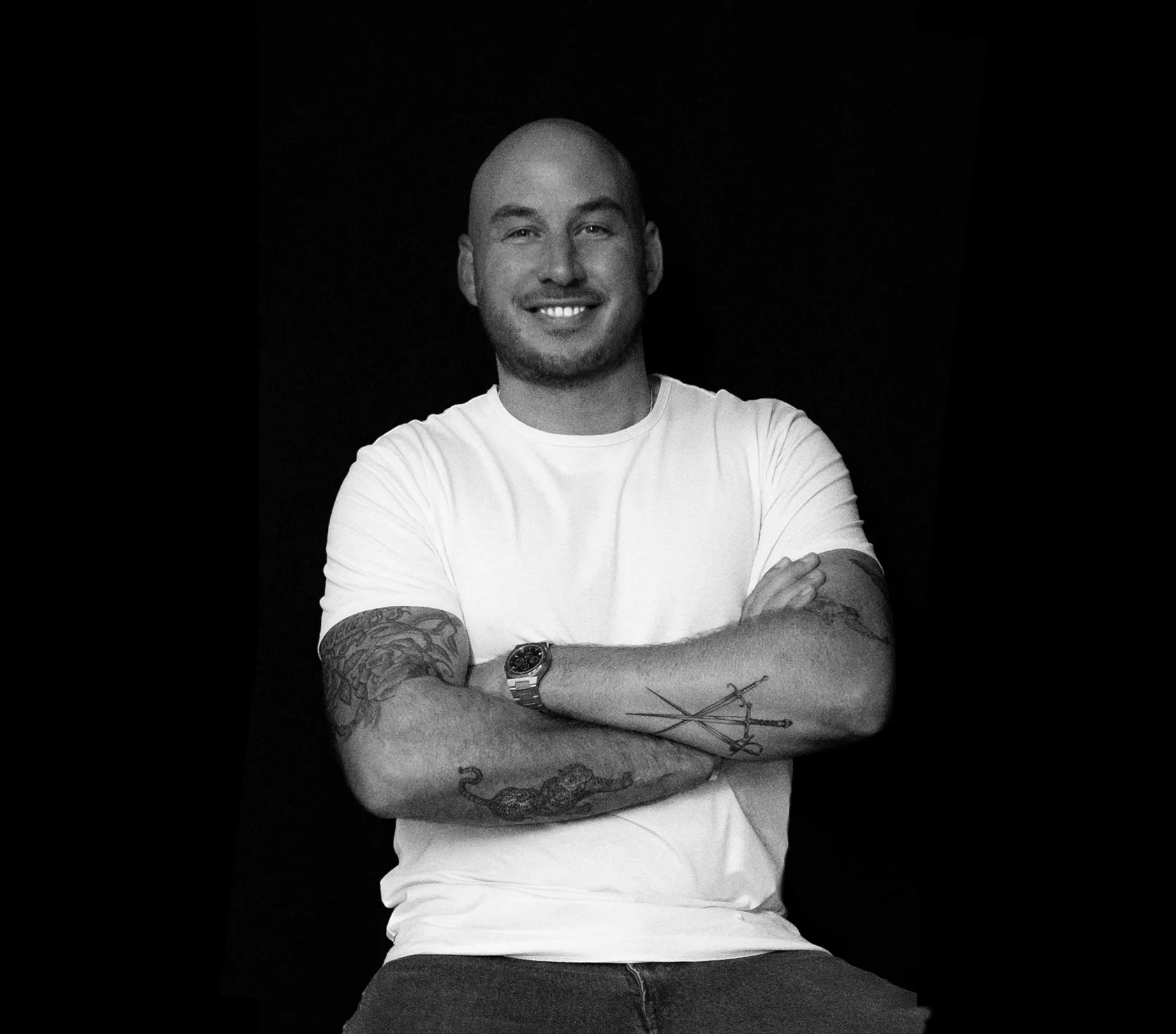
In this interview, we speak to Simon Walsh, global executive creative director of brand experience agency, onepointfive.
Walsh has spent his career moving between London and the Middle East, and he has watched both markets change in ways the industry has not quite caught up with. As global executive creative director at onepointfive, he now runs teams across the two regions for clients including Microsoft, Shopify and Bumble, after earlier work with Nike, PlayStation, UEFA, F1 and Burberry.
In this feature, he makes the case that experiential has confused output with impact – that one idea people actually remember is worth more than fifty assets lost in a feed by lunchtime. We talk about why briefs still open with a list of deliverables instead of a behaviour change, why indecision does more damage to craft than speed ever has, and why he would rather a CFO trust the work than a CMO applaud it.
He also weighs up what London and the Middle East can genuinely teach each other, why reach is attention you rent at rising cost, and where he thinks brand experience is actually heading once the buzzwords are stripped out.
What can London and the Middle East teach each other?
Walsh was drawn to the Middle East for the pace and the appetite to make things happen. He explains: “In the Middle East, an idea can be approved and built within weeks, and a small group of decision-makers will trust you to run with it. That gives the work a real energy because it does not get diluted by too many layers.”
He stayed in the region because it kept getting better. He adds: “The work is more crafted, more strategic and more emotionally intelligent than it was when I first arrived. And my family has grown with it. My daughter is growing up in a city that builds something new every day, which is pretty special.”
Comparing London and the Middle East, he says: “London is still the sharpest editor in the world. It takes a big idea and gets it down to the one thing worth saying. That discipline is invaluable. The Middle East moves faster and thinks bigger.”
He explains that this is partly because governments in the Middle East are putting serious money into entertainment, tourism and culture, and a lot is being built from scratch.
However, he says the briefs in the two locations are more alike than people would think. He says: “A brief in Riyadh can read like one in London: the same fight for attention and the same demand for the proof that the work has done something.”
In terms of what the two could learn from each other, he says: “I would resist making either market the teacher. A global approach is stronger than a regional one. London brings craft, editing and production discipline. The Middle East brings ambition and scale. Put those things together in one team, with one mission, and the best idea wins wherever it comes from, and it makes the work sharper in all directions.”
That fight for attention, wherever the brief comes from, is exactly what Walsh thinks the industry keeps getting wrong.
Has experiential confused output with impact?
Walsh argues that the industry has confused output with impact, celebrating volume: more content, more channels, more assets – and then wondering why nothing sticks.
He says: “One big brave idea that lives in someone’s memory is worth more than fifty assets that disappear in a feed within hours. We should be measuring what people remember, feel and do afterwards, not the quantity of deliverables.”
He believes this is the result of the always-on content era, agency economics and client-side pressure all feeding into each other. He explains: “Content is becoming about impact over output, and agency economics are catching up too. The industry is moving from selling hours to selling outcomes, which means clients pay for results and agencies put their best people on the problem rather than protecting a timesheet.”
For Walsh, “impact” in experiential is what people remember, feel and do afterwards – in that order, with the commercial outcome following. He explains: “I do not argue against reach. Reach matters. But it is attention you rent, and the rent gets more expensive every year. A good experience gives people a reason to recommend a brand, talk about a product or come back to it. That is a much more valuable conversation to have with a client than simply counting impressions.”
Relying on impressions, reach and content volume becomes a problem when they turn into the whole story. He adds: “Footfall and impressions are passive measures. They tell you how many people walked past, not whether anyone cared. What matters is what someone can recall a week later: the brand, the message, how it felt and what they did next. Before we design anything, we set out what the audience should remember, then measure whether they actually do.”
Fixing the brief
The “broken brief” is an age-old problem for event agencies, especially when it comes to output versus impact. Walsh suggests three ways to shift the conversation from output to impact in briefs.
First, put the behaviour change on page one. Most briefs open with a list of deliverables, so that is what agencies answer. He also suggests sharing the budget and constraints from the start: “The best creative doesn’t have to start with blue-sky thinking. In fact, some of the best work comes from understanding the real limitations and how to break them.”
Finally, he invites fewer agencies to pitch. He says: “Do the due diligence first, find the right fit, then give a select few a proper chance to respond. You get better work and better relationships.”
What’s next for onepointfive?
Walsh sees his job – running teams across two regions – as building the conditions for people to do the best work of their careers. He says: “That means creating opportunities rather than handing out tasks – giving people problems that are bigger than their experience and backing them when they take a risk. I also try to show my own thinking while it’s still rough. It makes it easier for other people to bring an unfinished idea into the room.”
An agency a CFO trusts as much as a CMO applauds
Looking ahead, Walsh wants onepointfive’s creative work held accountable – to become an agency a CFO trusts as much as a CMO applauds. He says: “Every brief should start with what the audience will remember, and every project should be measured against that.”
He’s also pushing the agency toward formats with a life beyond one night: work that returns each year, grows over time and becomes something audiences plan around. He says: “The Middle East is central to that because there’s a huge amount of new cultural, entertainment and destination work happening here. London and Dubai give us two strong engines, working as equals.”
Get the next few years right, Walsh says, and it will show up as work that returns and relationships that compound. He says: “Annual worlds that people plan around, and start building something with us year after year. It will still photograph beautifully, but the case for it will be bigger than that. The work should leave people with something they remember and deliver a result a CFO can respect.”
The risk of sameness
His one worry is sameness. Everyone reaching for the same tools risks everyone landing on the same answer. “It’s very tempting to take it,” he says. “The brands that stand out will be the ones willing to commission something more specific, more human and a little less predictable.”
It’s a fitting note to end on – in an industry chasing volume, Walsh is betting that the work people actually remember will always be the harder, rarer thing to make.