
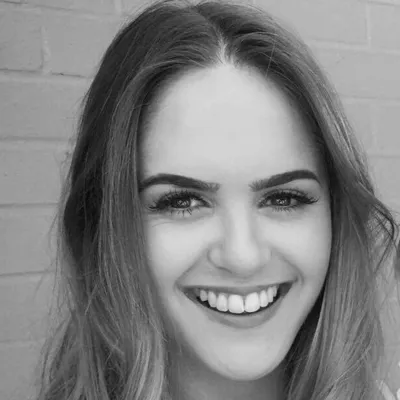
Over the course of the CN 30underThirty programme, Conference News will be speaking to members of the programme about their professional journey and the causes they’re championing to shape a more inclusive, forward-thinking industry.
This week, we meet Beth Versleys, senior account manager at Spiro.
What made you want to get involved in the industry and why?
For me, the combination of creativity, organised chaos and brilliant people is what makes the industry what it is, and it’s a huge part of what keeps me interested in it all these years later.
At 14, I did my work experience at the RAF Officers’ Mess, helping out with banqueting events, and that was when it clicked. I loved being behind the scenes and seeing just how much goes into making something look effortless to everyone else. No two projects are ever quite the same, and I love that mix of creativity, problem solving and people. You can start with an idea on a page and, after a lot of planning, conversations and inevitably a few curveballs along the way, suddenly you’re standing in the middle of something real that people are experiencing and enjoying. There’s something really rewarding about that.
The people are probably one of the biggest reasons I love the industry. I’ve had the chance to work with people from all over the world, from completely different backgrounds and cultures, and some of those working relationships have turned into genuine friendships.
Events have a funny way of speeding that process up. A couple of long days on site and a minor crisis or two can bond people pretty quickly.
What is the first career highlight that comes to mind?
Delivering an event in Australia on my own was an amazing experience both professionally and personally (feeding kangaroos was a personal highlight).
It wasn’t without its challenges. Trying to plan with a 12 hour time difference was one thing, but I also very quickly discovered just how big Australia actually is when you suddenly need something (rather large) delivered (and not provided by Amazon) “tomorrow”.
Equally, being so far from home with limited communication back to the office really threw me in at the deep end. Looking back, it was slightly chaotic, hugely rewarding and a massive confidence boost. One of those experiences where you learn an awful lot very quickly.
What have you learned about yourself since entering the events world?
I’ve learned that I’m way more resilient than I ever thought I was. I think the fact that I care so much about the outcome means that no matter how tough a situation is, there is always a solution and more importantly, I’ve learnt that you will get through it.
On the flip side, I’ve also learnt to never assume anything because the second you do, this job has a funny way of proving you wrong.
If you could give your younger self one piece of advice when starting out in events, what would it be?
Nothing is impossible, it just hasn’t been done yet. Don’t take no as the final answer straight away. Ask questions, challenge things, speak up and stay curious.
I’d also tell myself to trust the learning process a bit more. You’re going to make mistakes, particularly when you’re starting out, and that’s actually a good thing as long as you own them, fix them and learn from them.
Chances are you’ll never make the same mistake twice, you’ll just find exciting new ones to make instead (for the benefit of my boss, this is a joke obviously).
How important are schemes such as CN 30Under30 and do you believe the industry does enough to support young professionals?
Schemes like CN 30Under30 are really valuable because they give young professionals a platform and recognise the contribution they’re already making to the industry. They also give you the chance to meet other people at a similar stage in their careers, build new connections and learn from people whose roles and industry experiences might be completely different to your own.
For me personally, it’s also been a lovely opportunity to stop and recognise how far I’ve come, something I’m admittedly not very good at.
I think the industry does a lot to celebrate young talent, but the biggest thing we can do is trust people with opportunities. Give them responsibility, include them in the important conversations, take them on site and let them experience the realities of the job first hand.
I’ve always learnt the most when I’ve been given the chance to have a go myself, knowing there’s someone there to support me if I need it. Sometimes being trusted to work it out is the best training you can get.
How do you see the events industry changing over the next five years, and how do you want to be part of that change?
I think the next five years will be less about doing more for the sake of it and more about doing things smarter and with greater purpose.
Sustainability will absolutely continue to shape the industry, but I think it will increasingly become the expectation rather than the ambition. The next step is asking better questions from the outset. Do we need to build this? Can it adapt? Can it work harder across different events, markets or audiences? I’d love to see us move away from measuring creativity by how much we create and start looking at how intelligently we use what we already have.
The same goes for the experience itself. I’d love to see us move away from automatically thinking bigger means better and spend more time asking what we actually want someone to feel, learn or remember when they leave. It’s very easy to get caught up in creating the biggest stand, the newest technology or the biggest wow moment, but if it doesn’t mean anything to the person experiencing it, what has it really achieved?
I think some of the best ideas can actually be quite simple. It’s about creating something with a reason behind it, rather than adding things because we can. If someone walks away having genuinely connected with a brand, learnt something or simply remembers how an experience made them feel, I think that’s far more powerful than something that just looked impressive at the time.
What is an issue or topic within the industry that you think is important and want to champion?
One thing I’d really like to champion is giving people the time and confidence to think for themselves and be creative.
Events is such a fast paced industry and quite often everything seems to need doing yesterday. With technology, process, regulations and autonomy becoming a bigger part of how we work, it can be really easy to go for the quickest answer or just follow the process we already know works. I think we need to be careful that we don’t lose the ability to stop, question things and think for ourselves.
I also don’t think creativity should just sit with the creative team. Some of the best ideas can come from project managers, suppliers, production teams or simply someone looking at a problem in a completely different way. People should feel comfortable throwing an idea into the mix without worrying about whether it’s perfect. Sometimes a holistic approach is what’s needed.
As the world becomes more automated, I think the human side of what we do becomes even more important. Being curious, having ideas and feeling confident enough to question things are skills I’d really hate to see us lose.
Why is this particular issue or topic important to you?
A lot of what I’ve learnt in my career has come from being given the freedom to work things out for myself. I’ve been able to ask questions, try different approaches and occasionally get things wrong, which is usually where you learn the most anyway.
Events are built on ideas and problem solving. There isn’t always one right answer and sometimes it’s the wildly crazy suggestion that gets thrown into a conversation that ends up turning into something brilliant.
Technology can make our lives easier and give us answers much quicker, which is a great thing, but I don’t think it should replace our own judgement or curiosity. We still need people who are willing to question the answer, add their own thinking and occasionally go in a completely different direction.
For me, creativity isn’t about being the person with the best idea in the room. It’s about feeling confident enough to put an idea out there in the first place.
What do you plan to do to continue to champion the topic?
A big part of it is practising what I preach. When things get busy, it’s easy to default to what’s familiar because it’s quicker and safer. I want to keep challenging that instinct, stay curious, make time to step back and ask: is there actually a better way?
I also want to embrace new technology rather than be intimidated by it, but without letting it do the thinking for us. At its best, technology should enhance our ideas, not replace them. If it can take care of the repetitive stuff and give us more time to think, create and solve problems, that can only be a positive.
The more we encourage people to be curious, speak up, and trust their own thinking, the more creative the industry will be and the human element will remain, as a result.