

In this series, features and series developer Heather Nicholls takes you behind the scenes of some of the most compelling brand activations and events.
This week, we meet INCEPTION Worldwide, the agency behind the Pokémon Center pop-up at The European Championships at Excel London.
The Brief:
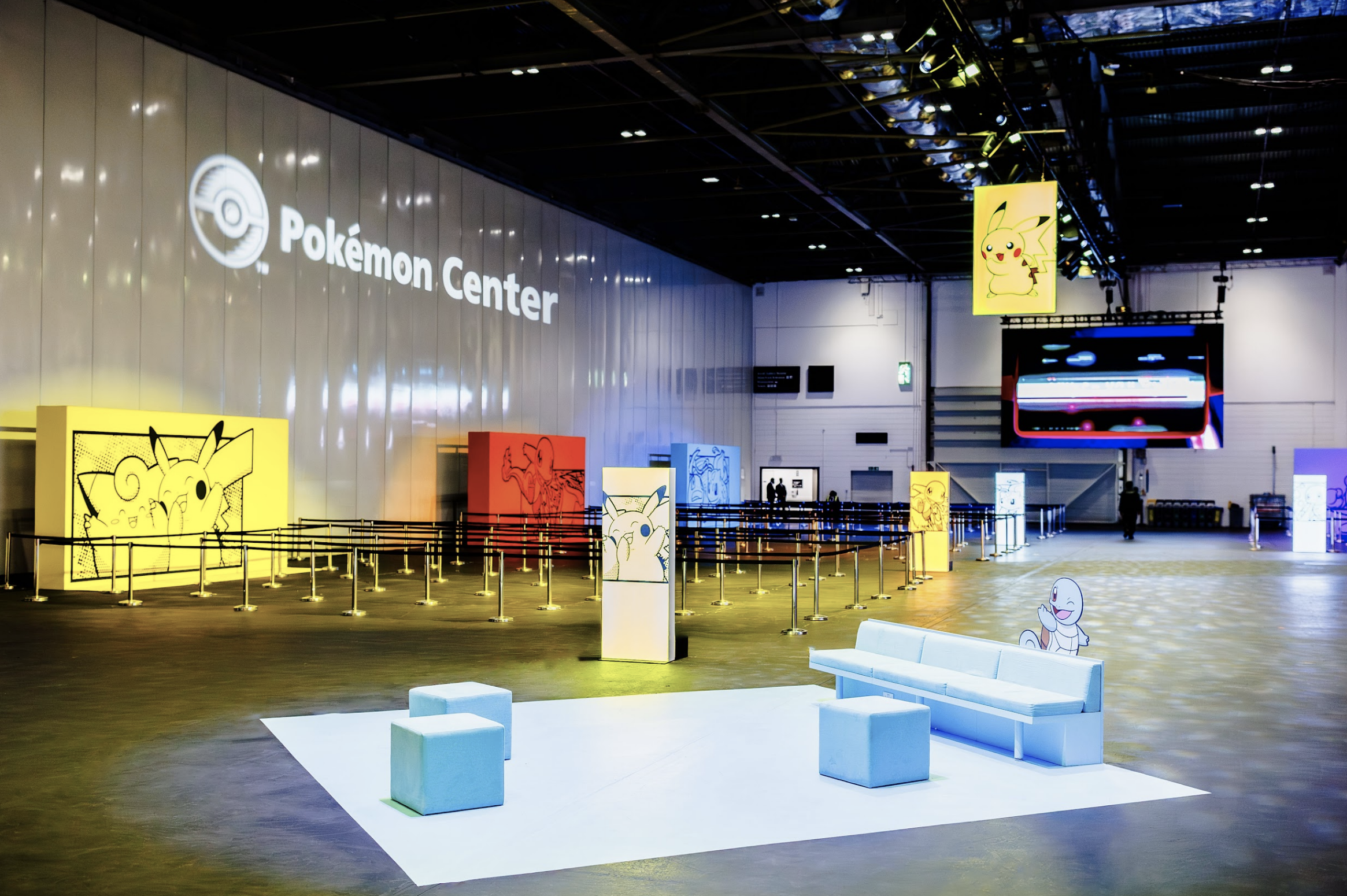
The brief was to take the established Pokémon Center pop-up at the European International Championships and push it beyond being a high-performing retail environment into a richer, fan-first brand experience.
INCEPTION interpreted that as an invitation to design a full journey rather than just a store: transforming the queuing area into a branded experience in its own right, layering in architectural moments, interactive touchpoints and world-first product reveals so it felt like Pokémon giving something back to its community rather than simply selling to them. Year on year, that has meant evolving from a fairly straightforward queue with basic photo ops into a much more curated flow that acknowledges how passionate – and how knowledgeable – these fans already are.
The Execution:
Mark Hutchinson, managing director of INCEPTION said: “We started with a very honest look at last year: we’d created some lovely product and photo moments, but because the space was so vast, people were flowing straight past them to get into the store.”
This year the agency re-planned the journey so that fans had around six deliberate touchpoints from the moment they left ExCeL’s boulevard – ranging from new product showcases and interactive polling to tactile, family-friendly elements like the sticker wall – so engagement with the brand was baked into the route
Using the existing footprint as a base, the agency updated the floorplan and spatial planning, then developed mood boards and thumbnail concepts which we took into creative sessions with the different Pokémon teams, refining details like the lighting levels content strategy and where each experiential element sat within the flow.
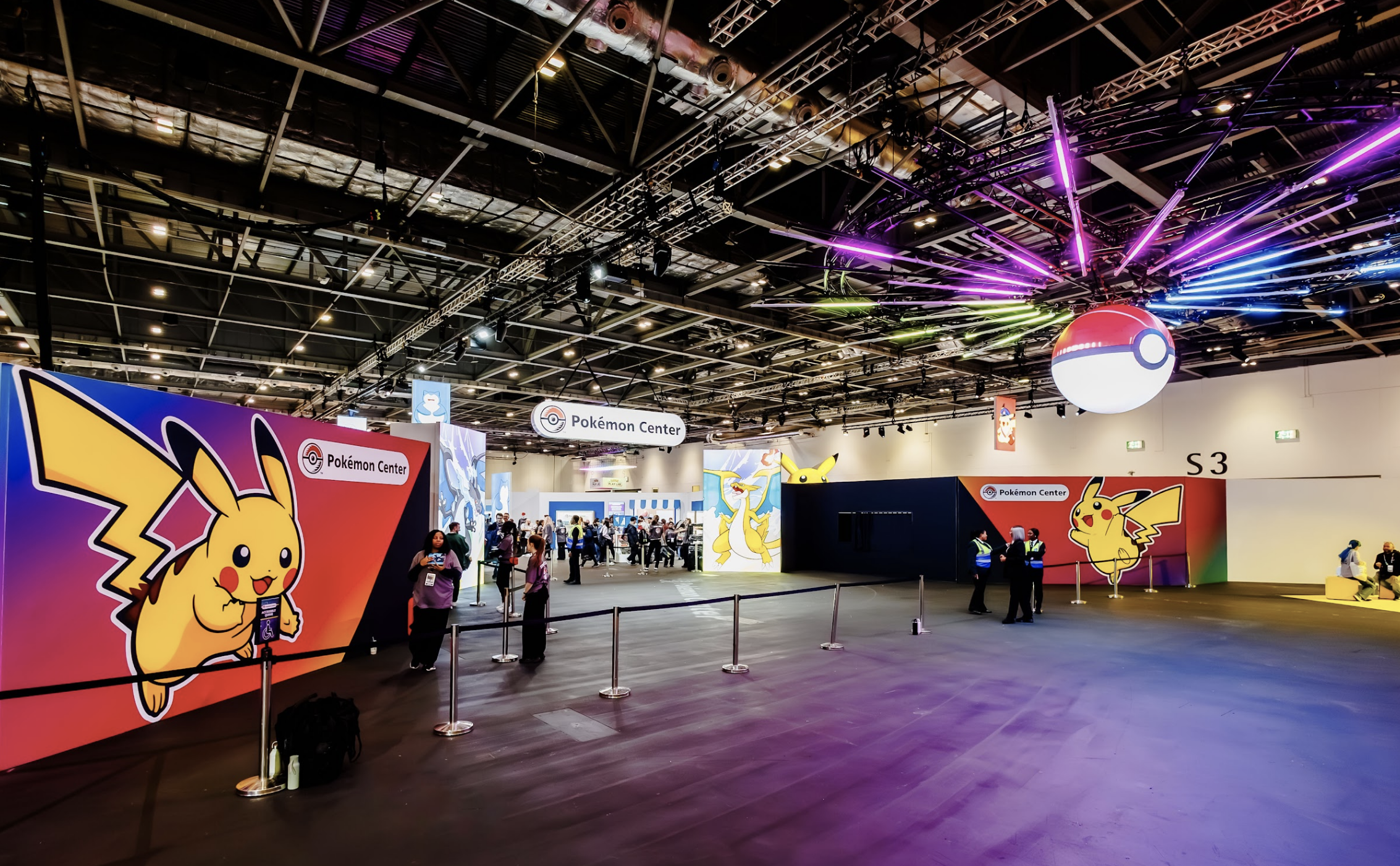
From there, it moved into detailed design, technical development and fabrication, with the onsite team overseeing build, integration of technology such as the LED Sphere, and the final dressing to make sure the space felt cohesive from first step to checkout.
Speaking on the inspiration for the event, Hutchinson said: “The main creative hook was colour blocking as a way to connect fans emotionally with specific characters and ranges. By giving each character world its own colour palette and carrying that consistently through lightboxes, fixtures and graphics, we created a really intuitive layout: if you’re drawn to a certain character, you’re drawn to that zone, and you instinctively know the products you’ll find there.”
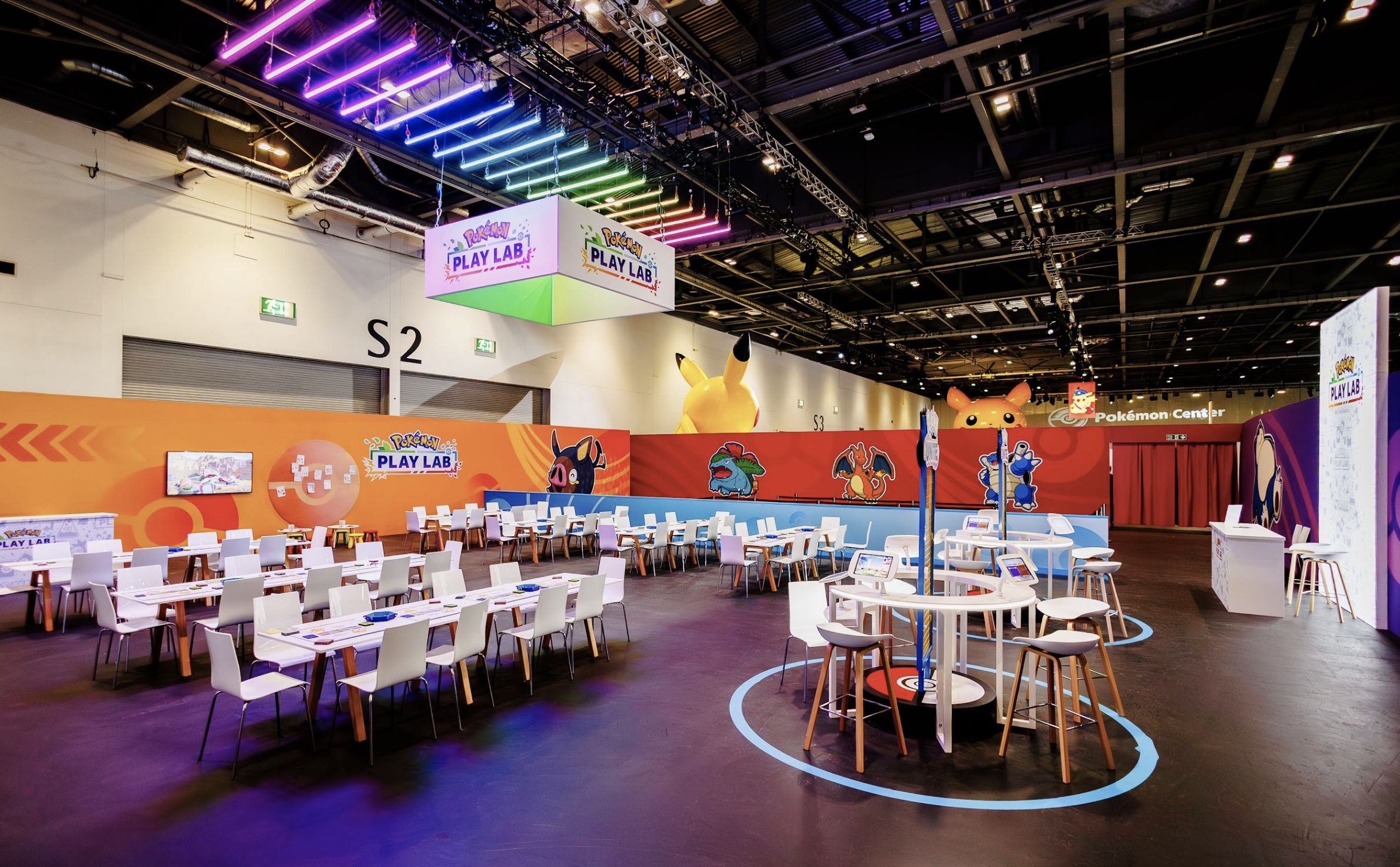
He added: “That simple device was also a neat way to bring order and clarity to a very large space, so instead of feeling like a warehouse of merch, it felt like a series of distinct, character-led worlds fans could move between.”
Throughout the execution and development process, the agency and client collaborated closely together. Hutchinson said: “The project has become progressively more collaborative each year.”
This year, there were multiple distinct stakeholder groups – the global marketing and brand team, the Pokémon Center retail team, and the seperate team behind Pokémon Pocket, which is a mobile game with its own objective and tone. Hutchinson explained: “We used the spatial plan and fan journey as a shared reference point, then ran creative and review sessions with each group so everyone could see where they “lived” in the space and how their priorities were reflected, whether that was showcasing unreleased products, driving specific campaign messages or keeping the retail operation slick.”
He added: “Because we’d invested in that way of working over the past few years, there was a strong level of trust this time; the marketing and brand teams in particular were happy to lean into our ideas for the new brand experience area, and off the back of that success, we’re now talking about adapting a similar set-up for events in the US later in the year.”
In terms of challenges for the execution of this event, Hutchinson outlines two main ones – the number of stakeholders and ensuring that everyone was heard, and the late addition of a substantial second project, the Pokémon Pocket activation, about six weeks out. Hutchinson explains: “Pokémon Pocket sits outside the core retail space and has a slightly different vibe, so we needed something that felt true to that side of the brand while still sitting comfortably under the overall EUIC umbrella.”
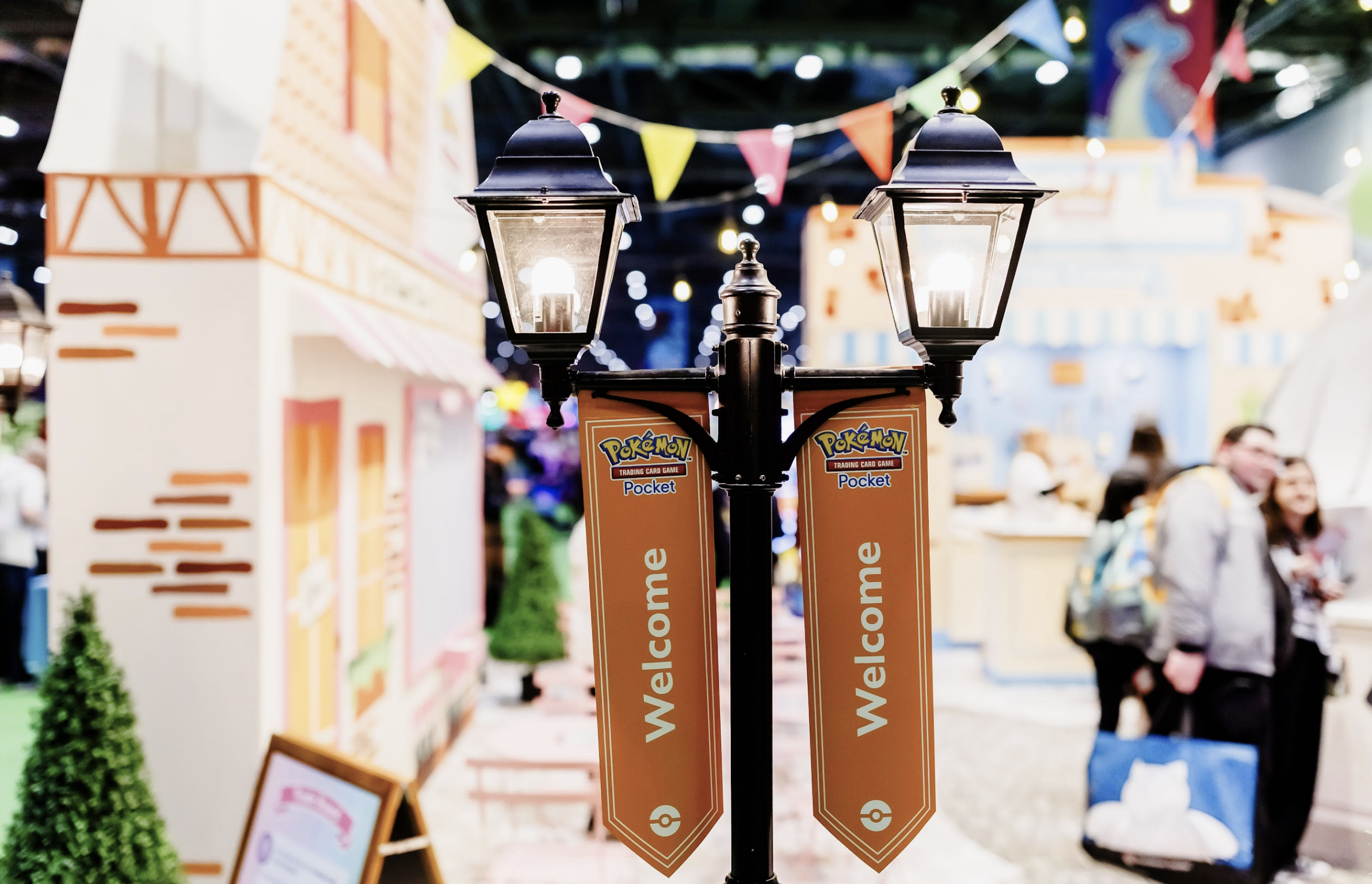
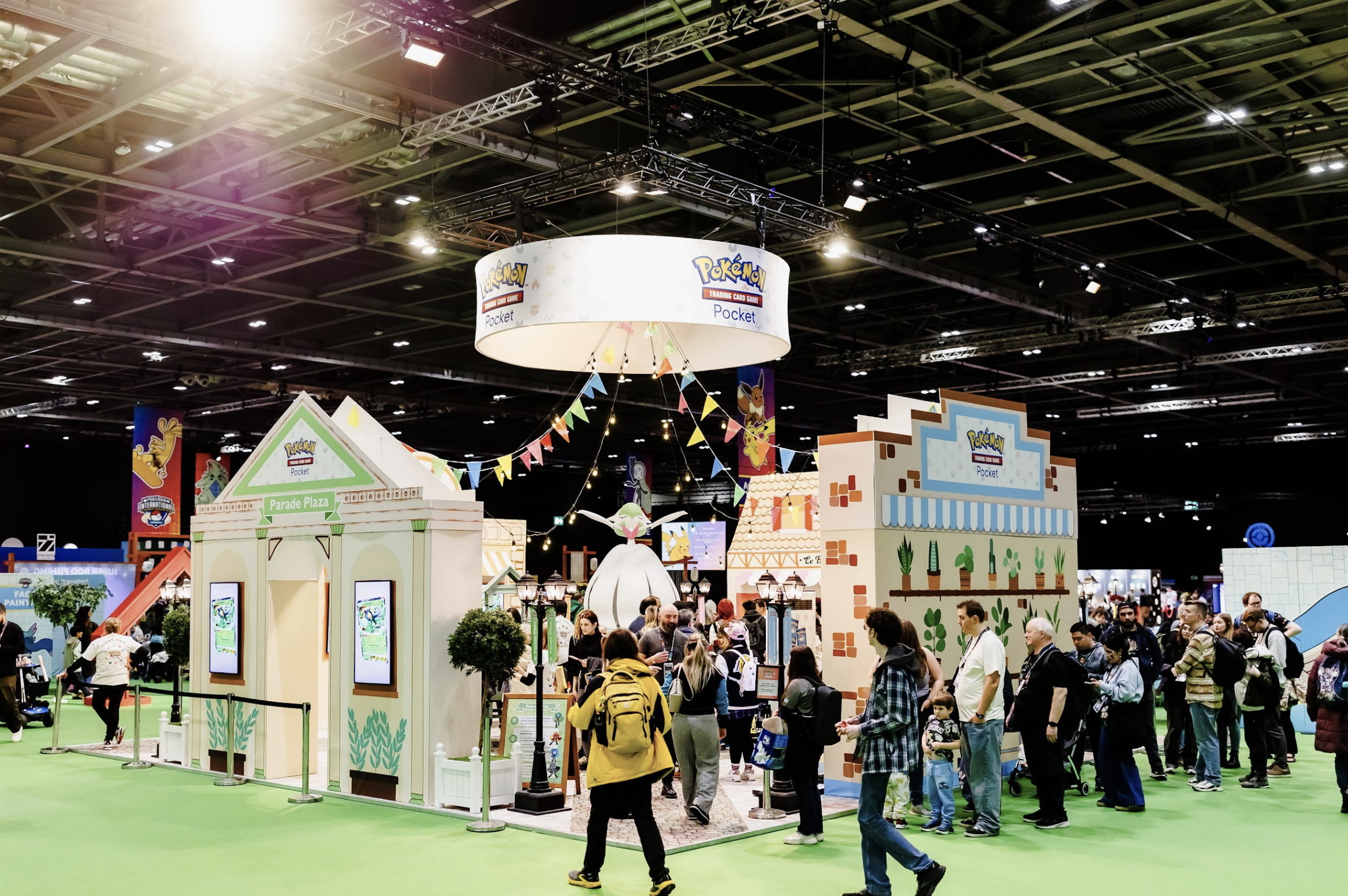
The agency responded by designing a playful street-scene environment where fans could move around, physically throw balls at cans, hit various touchpoints and then be rewarded with a free goodie bag of stickers and other items, which turned what could have been a bolt-on into another considered chapter of the overall experience.
He added: “Alongside that, we were very conscious of the volume and sterility of the ExCeL boulevard; creating a sense of intimacy and immersion in such a big, shiny, echoey space is always a challenge, so we treated atmosphere as a design problem early on rather than an afterthought.”
The Results:
Hutchinson said: “This was the strongest iteration yet: more people came into the space than in previous years, and we saw far higher engagement with the experience layer before fans even reached the tills. Although retail figures sit with Pokémon, you could see the shift in behaviour on site – people weren’t just passing through; they were stopping to explore, interact, vote, take photos and talk to ambassadors, treating it as part of their championship weekend rather than a necessity on the way to shopping.”
He added: “Crucially, the environment worked hard for different audiences and dayparts, flexing from a high-volume fan journey during the day into an intimate PR and influencer launch on Thursday evening without losing its atmosphere.”
From a brand point of view, the activation delivered a much deeper level of engagement: fans had multiple chances to interact with the brand before they even picked up a product, from voting in the “What’s Your Favourite?” campaign mechanic to exploring unreleased items, to contributing to a communal sticker wall that proved popular with adults as well as children.
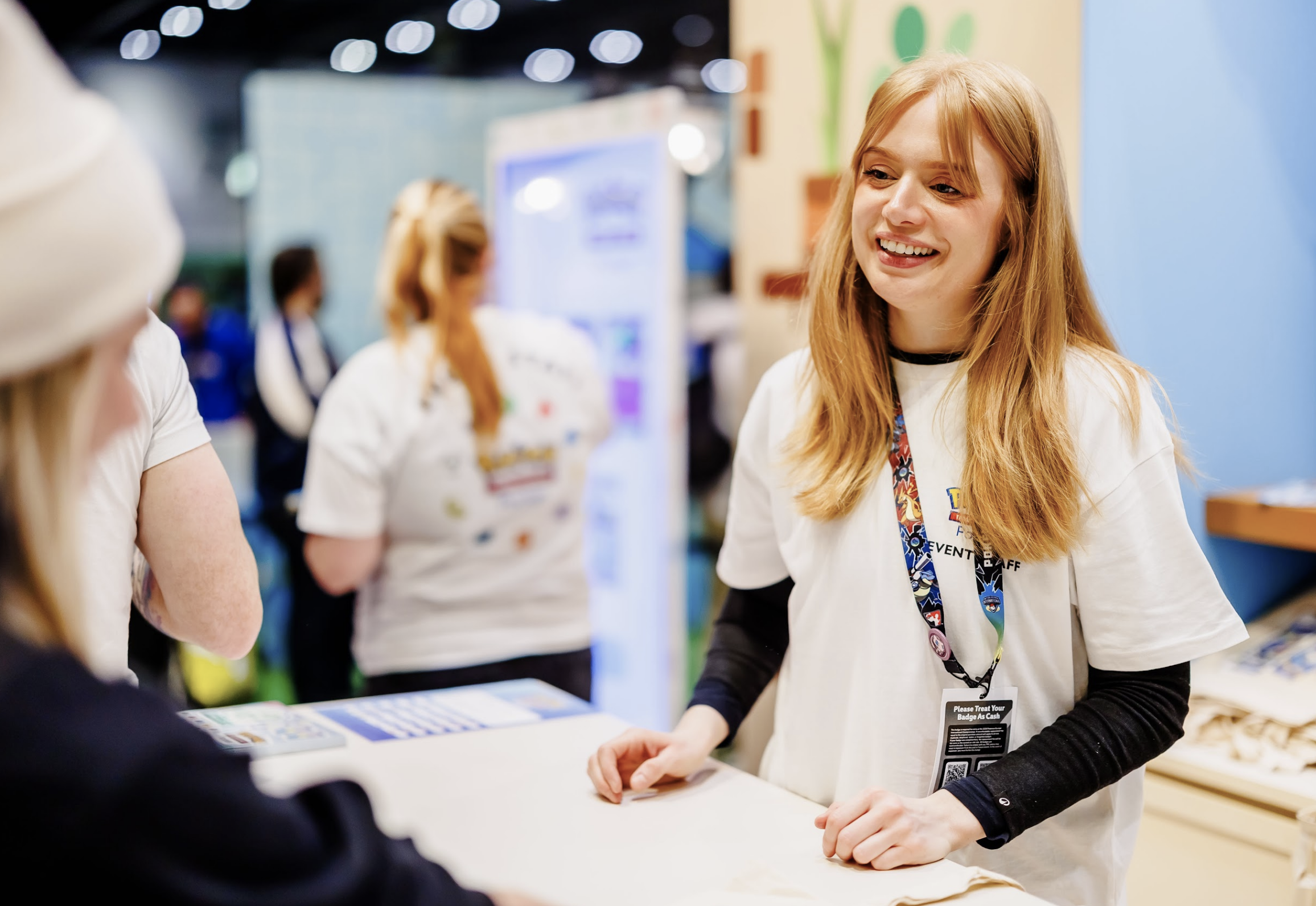
Hutchinson added: “It also gave the client a flexible, multi-use environment – the same build could host a private PR and influencer evening, complete with hosted tour and time to shop, as well as serving thousands of fans during the day, which is a very efficient use of budget and effort. Behind the scenes, it reinforced our role not just as a build partner but as a strategic creative collaborator, trusted to manage complex projects that span multiple parts of the business and use some of the largest runs of BeMatrix rental frames in Europe.”
The clients immediate feedback was how much they valued the new brand experience area and the fact that it worked so well for both fan engagement and PR. They also liked that it felt like a genuine journey. Hutchinson said: “The LED Poké Ball sphere drew a lot of attention and became a bit of a hero feature – it’s a simple idea in some ways, but in that scale and context it made a big difference to how the entrance read and how people perceived the upgrade from last year. More broadly, there was a strong sense of satisfaction that we hadn’t just repeated the previous store, even though that had been successful; the new elements, from the world-exclusive product reveals to the expanded experiential touchpoints, felt like a clear step forward.”
Trends and Learnings:
Hutchinson said that an important learning was around infrastructure. He said: “In previous years we’d relied on venue Wi‑Fi, and despite the cost it hadn’t always been as robust as we needed, so this year we brought in our own network via an external supplier and it worked significantly better. That’s something we’ll be looking to repeat for similar large-scale exhibition environments, where connectivity is mission-critical to everything from ticketing to content.”
He added: “The other big takeaway is the need to build measurement into the concept from day one; the client quite rightly wants to avoid data capture that feels intrusive or off-brand, but there’s a lot of value in designing one or two very clear metrics – whether a dedicated hashtag or a specific interactive mechanic – that can give everyone a tighter read on performance without compromising the fan-first feel.”
In terms of trends, Hutchinson is noticing a move away from throwing technology at a space just because you can and instead, noticing a stronger emphasis on simple, interactive ideas that genuinely connect with how people feel when they encounter a brand. He said: “For Pokémon specifically, one of the biggest misconceptions is that the audience is primarily children – in reality, a huge proportion of the fanbase are adults in their thirties who grew up with the cards and games and now have real disposable income.”
He added: “That insight shaped a lot of our thinking: we wanted the space to be playful and accessible for younger visitors, but never childish or gimmicky, so adults felt it was for them as much as anyone. Mechanics like the “What’s Your Favourite?” voting wall, the world-exclusive product reveals (from the LEGO Pokémon set to new pet and cooking product lines) and the sticker wall are all straightforward, but they invite participation and conversation, which is very much where experiential is heading.”