
By David Ogiste, founder of Nobody’s Cafe.
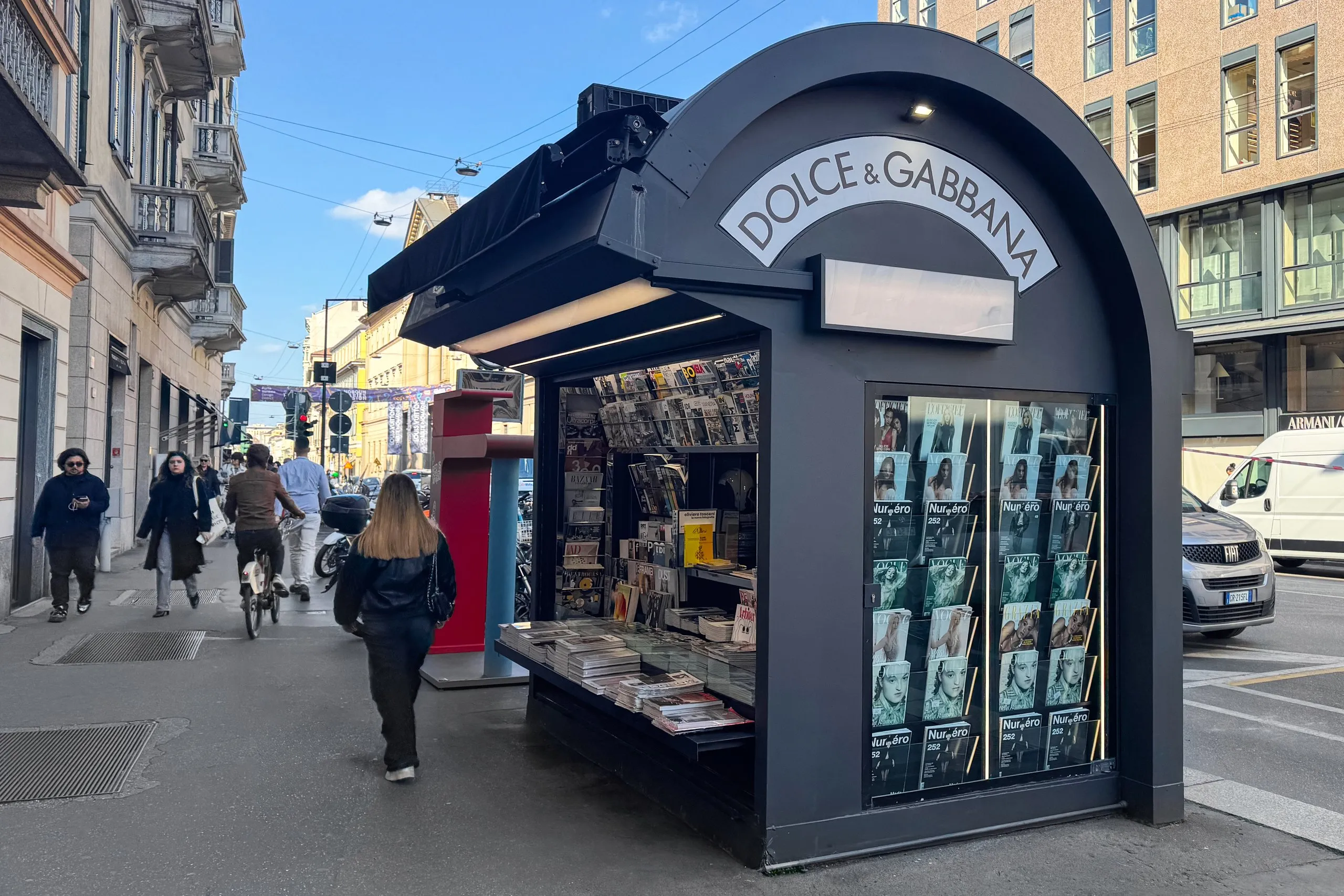
If you walk through central London, Paris, or New York today, you will likely stumble across a beautifully branded newsstand.
In fact, you can hardly go a few weeks without seeing one pop up on your social media feed, taking over a street corner to promote everything from luxury fashion to premium lager.
But how exactly did an antiquated piece of street furniture become the ultimate modern experiential canvas?
First introduced to the boulevards of Paris in 1857, the classic wrought-iron newsstand was designed to bring modern elegance to urban streets. As part of Baron Haussmann’s grand renovation of the French capital, architect Gabriel Davioud created these iconic, dome-topped kiosks to seamlessly organise the booming newspaper trade.
The concept quickly crossed the Atlantic, taking off in New York City during the 1880s and 1890s. This rapid American expansion was driven by fierce newspaper circulation wars between rival publishers like Joseph Pulitzer and William Randolph Hearst, who desperately needed strategic distribution points for their daily editions.
Now, well over a century later, this iconic street fixture is experiencing a remarkable renaissance within the world of brand experiences. Brands such as Hermès, Acne Studios, Loro Piana, and 1664 Blanc have popped up with their own take on the centuries-old newsstand.
While traditional pop-up stores will always be effective, they often need a reason for people to head inside.
A casual passerby who doesn’t know the brand is doing a pop-up may assume it’s simply a new store. They may expect that stepping inside will lead to pressure to purchase, which is especially true for luxury brands. So they walk on by.
A street corner newsstand operates with zero friction. It meets passersby directly within their daily commute or weekend walk, effortlessly blurring high culture with everyday life. By repurposing a globally recognisable piece of street furniture, brands establish immediate familiarity while simultaneously inviting curiosity. The structure acts as the perfect anchor, giving event designers a familiar canvas to weave distinct brand codes into the fabric of the city.
Beyond acting as a living billboard, the modern newsstand taps into a deep sense of tactile print nostalgia. In an era dominated by digital noise. The physical nature of print media holds renewed emotional weight. Modern newsstand activations often distribute beautifully designed brand newspapers, bespoke magazines, localised city guides, or limited-edition art prints. Giving attendees a tangible physical keepsake transforms a street interaction into a lasting brand reminder that lives on coffee tables and desks long after the event has wrapped.
Alongside this, their here-today, gone-tomorrow nature speaks directly to modern advertising mechanics. People will queue around the corner to taste whatever is on offer and make sure they don’t miss out on limited-edition merchandise, newspapers, ice cream, or whatever else is on offer at your stand. Strong additions to the newsstand trend often make their way into publications and get shared on socials.
But don’t be fooled by their small size; these newsstands aren’t always a cheap (or easy) solution.
Building a bespoke structure that genuinely reflects the heritage and craftsmanship of a luxury fashion house requires high-end fabrication. Operating within such a limited area forces creative restraint, resulting in tightly curated storytelling where every single detail must be impeccably considered. Then add the permits for prime space in cities like London or New York; the impact can sometimes outweigh a pop-up store, but so can the budget.
I doubt Gabriel Davioud thought Hermès (one of the few brands that existed in 1857) would use his idea to promote their brand in the 2020s.
But this trend shows the lasting impact great design can have on how we create experiential activations now.
High-impact experiential marketing doesn’t always require massive venues or complex digital builds. By leaning into urban nostalgia, tactile keepsakes, and friction-free engagement, event strategists can transform humble street architecture into compelling moments of brand discovery.
As more of these activations pop up across global capitals, design and execution must stay perfectly in tune for brands to keep standing out.