
By Elevate Mentoring
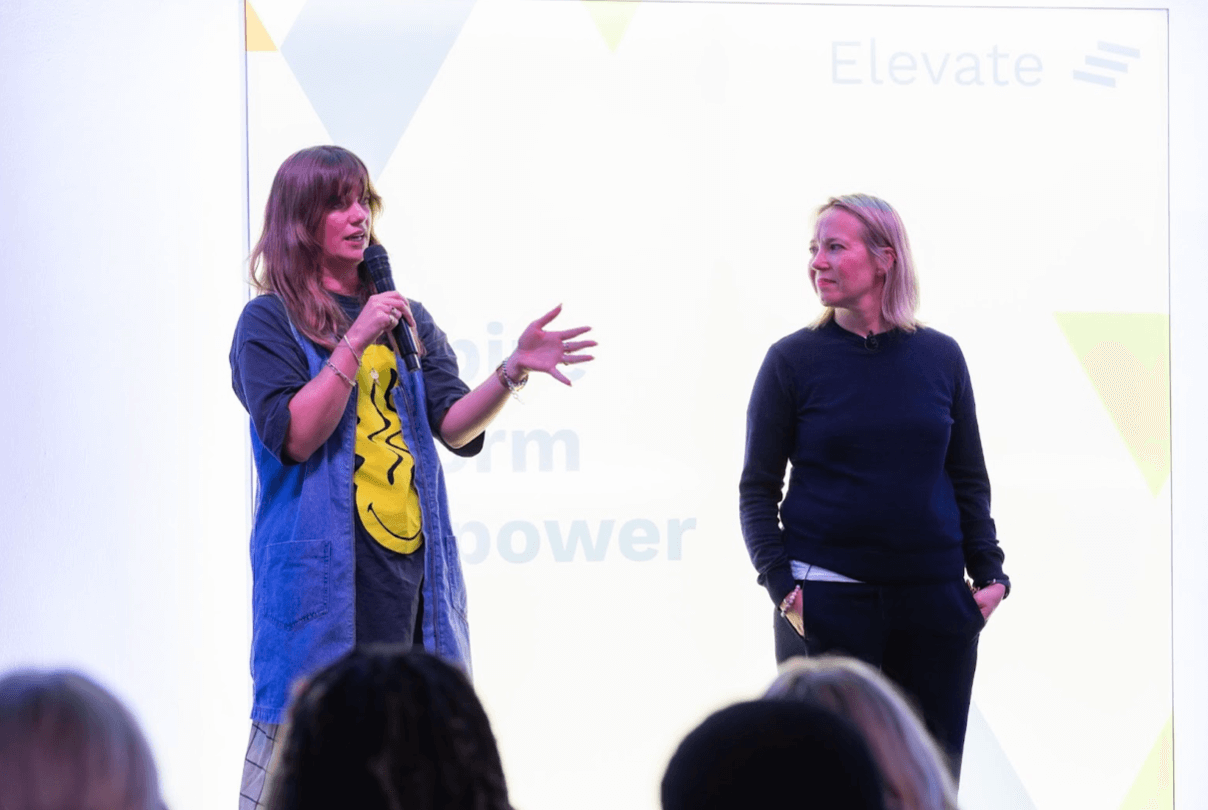
Late last month, Elevate Mentoring hosted its latest Inspiration Session at Protein Studios in Shoreditch. This live and in-person monthly gathering brings together members of the Elevate community to share tools, insights and inspiration. Specially curated by the Elevate team, these sessions go beyond theory, delivering human-first experiences that connect people and spark ideas.
The July session, titled Unfiltered: The Return of Real, did exactly that. The event featured two powerful talks from Lisa James, Founder of The Wentworth Collective, and Louisa O’Connor, Founder and Managing Director of Seen Presents. Both speakers made the case for why, in a world increasingly driven by screens and algorithms, the most meaningful moments still happen in real life.
From the moment the doors opened, the theme of real connection played out in the room. Conversations flowed before the talks even began. The Q&A sparked such a buzz it could have easily run long into the evening. The message landed: people are hungry for something deeper – slower, messier, more human.
Lisa James: Designing for aliveness
Lisa James opened the evening by asking us to reflect on what it really means to feel alive. As the Founder of The Wentworth Collective, Lisa designs experiences around the world that foster meaningful connection. Her talk, adapted from her recent appearance at the DO Lectures in Wales, explored how our pursuit of productivity and hyper-digital lives is slowly eroding our sense of presence and with it, the joy of being alive.
“Aliveness,” Lisa explained, “is more than having a pulse. It’s about feeling awake, aware and emotionally engaged in the moment.” She urged the room to think about how we design for that feeling – how we create space not just for content but for emotion, spontaneity and shared energy.
Drawing on sociologist Émile Durkheim’s concept of collective effervescence, Lisa described the magic that happens when a group of people comes together for a shared purpose. It’s a spark that can’t be manufactured. You have to leave space for it.
Her challenge to the room? Rethink how we use technology in events and experiences. Rather than using it to replace human interaction, use it to deepen it. Design experiences that don’t just keep people busy but make them feel something. She left us with a question that hit home: “When you look back at the moments that meant the most, will you have your phone in your hand or will you just be there, fully present, fully alive?”
As Lisa put it, “The experiences people talk about years later are always the ones where they felt something.”
What Lisa taught us
- Design for aliveness: Go beyond activity planning. Design for presence, emotion and energy
- Lead with humanity: Let technology support, not replace, real connection
- Leave space for the unscripted: The most powerful moments often aren’t planned
- Think beyond ‘audiences’: Treat people as humans, not heads in seats
- Don’t forget older generations: Design with all age groups in mind
- Put your phone down: Presence creates memories. Distraction steals them
Louisa O’Connor: Experiences that make you feel
Taking the stage next was Louisa O’Connor, Founder and Managing Director of Seen Presents. Her agency is behind some of the most talked-about brand activations of recent years, including Netflix’s immersive rooftop takeover at Cannes Lions – a screen-free, story-led playground where shows like Bridgerton and Squid Game were brought to life.
Louisa reframed the conversation around brand experiences with one powerful question: “How did you feel at your first gig? Now, how did you feel when you saw your first advert?” The difference was clear – emotion creates memory, and memory is the ultimate measure of impact.
She challenged the idea that brand experiences are just about creating shareable moments. Instead, they’re about creating moments people want to share because they felt something real. Her mantra: feelings outlast impressions.
In a world where audiences are exhausted by digital noise, real-world experiences offer a sense of presence, tactility and depth. The most successful activations aren’t flawless, they’re emotionally resonant. She encouraged brands and experience-makers to prioritise authenticity over polish, meaning over perfection and human connection over digital reach.
As Louisa said, “We don’t need more content. We need more memory.”
What Louisa taught us:
- Design for emotion, not attention: If it doesn’t move someone, it won’t stick
- Keep it real: Audiences can tell when something’s fake
- Let the moment lead: Beautiful, joyful moments don’t need a prompt to go viral
- Prioritise memory over perfection: Imperfection often makes experiences more human
- Think multi-generational: Don’t over-segment. Let generations mix
- Create experiences, not events: Events happen. Experiences stay with you
Together, Lisa and Louisa made a compelling argument for why real-world experiences matter more than ever because they make people feel alive, connected and seen. That’s the return of real.
Elevate Mentoring as it’s all about, learning and development, opening doors, building confidence and growing community. More details here www.elevateme.co