
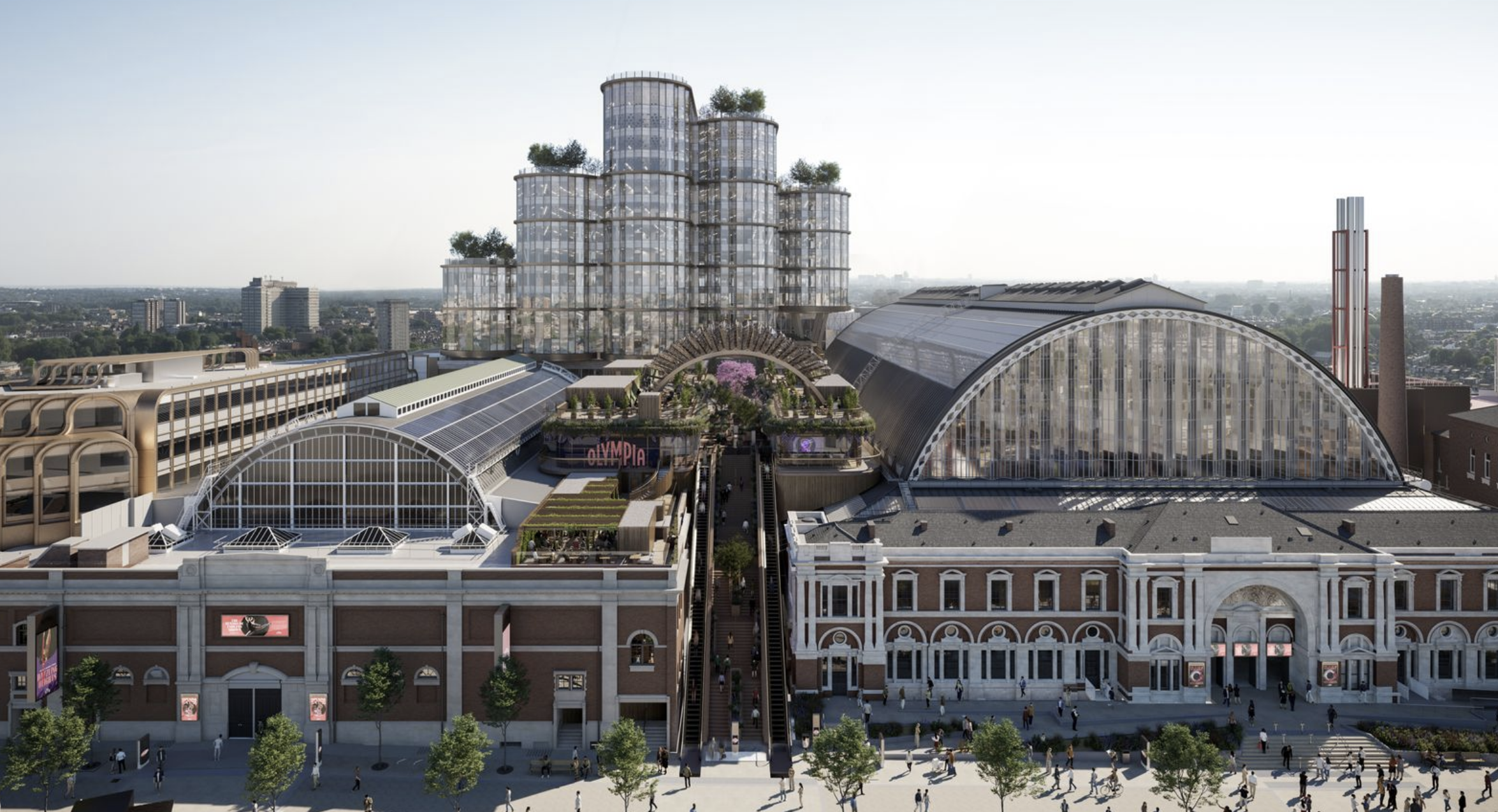
In this blog, Carly Gibbs, head of customer experience at Olympia shares her advice on customer experience.
We talk a lot about customer experience (CX), but in venues it’s still too often reduced to a few processes at the door. In reality, CX begins long before anyone reaches the entrance and it involves every person who interacts with your brand – externally and internally.
In the lead up to Olympia’s brand-new ICC and private members club launching in 2026 – alongside new hotels, restaurants, bars, music and cultural venues across the wider destination – it’s incredibly important that we get this customer journey right. Whether someone is coming to a show in the theatre, staying at one of the hotels or attending a conference at the ICC, we want their experience to feel seamless and memorable.
As we start to re-imagine Olympia’s CX journey, here’s some of the things I’m looking at, and where I’d recommend others seeking to elevate their own CX journeys to start.
Who counts as the customer, and which journeys matter on day one
“Customer” means anyone who interacts with your brand: organisers, exhibitors, visitors and delegates, artists, contractors, suppliers, and yes, your own teams. Many of these interactions are digital long before they’re physical.
A clunky website, flat social feeds, or inward‑looking language (all “we do” and no “you get”) contradicts with the reputation you’re trying to build. People make snap judgements and pass them on.
You may also want to consider the number of journeys customers will take in relation to your brand and how they might differ. In Olympia’s example, a customer’s journey for the ICC may look very different to that of someone attending an exhibition in one of our Heritage Halls, or booking a hotel, music gig or dinner.
On day one, I’d prioritise two journeys: the organiser and the visitor/delegate.
For the organiser, this journey starts from discovery (finding clear information and costs) to sales (how responsive/knowledgeable/enthusiastic the commercial team is), through to handover to the venue management, delivery, debrief and rebook. This journey exposes internal seams: if your commercial team doesn’t know where the ops team are up to, the client will feel the gap.
The visitor or delegate journey refers to potentially thousands of people who may be “the customer of our customer” but are ultimately ours too. This journey is just as important, a brilliant time in our venue lifts F&B spend, enhances the event, and drives return – which in turn brings organisers back. Treat venue and event as one experience because that’s how visitors perceive it.
Within the first 60 days, here are the three actions I’d take:
1) Map the journeys end‑to‑end. Walk them physically and digitally. Where are the touchpoints? What are we trying to make people feel at each point (welcome, safe, excited, unhurried)? We often jump straight to operations – bag checks, ticket scans – and skip the emotional outcome. Design from the feeling backwards.
2) Listen well and get a baseline. Scrape existing public sentiment (e.g., Google reviews) to benchmark where we are. Run quick interviews, team huddles and short pulse surveys. Review your complaint processes and consider how they might be improved to ease both visitor and staff experiences. Don’t shut feedback down; actively encourage it. Your frontline already knows the pain points and the moments of truth. Capture themes and trends, not just anecdotes.
3) Empower the frontline with tools and boundaries. CX thrives where humans meet humans. Give people the permission, confidence and simple playbooks to fix small problems on the spot. Define the purpose of each role in experiential terms (e.g., security’s purpose: make people feel safe and welcome, keep flow moving, give clear directions) and back it with training, recognition and the right uniform.
Quick wins you can deliver this week:
- Arrival & welcome (the “last mile”). The experience starts at the station, the bus stop, the pavement. Don’t default to tape and signs – use people. Position visible, personable wayfinders at decision points. Lift sightlines (signs above head height), use movement and sound as cues, not just arrows. Also consider branded hosts, upbeat audio, screens, light touch sampling. Theme parks do this brilliantly: they acknowledge queuing is a pain point and design experiences to keep people engaged.
- Fix your first digital impression. Sense‑check the website and socials for usability, clarity and tone of voice. Is it easy to find specs, access, F&B options, and costs? Replace “we do” language with “you get” outcomes.
- Organiser enablement. Stop making organisers assemble information for exhibitors from five different PDFs. Build a simple, searchable portal/pack with travel info, access instructions, facility info, brand‑ready snippets they can cut and paste straight into their comms. Make it easy and you make it extraordinary.
- Recognition loops. Start weekly shout‑outs tied to CX behaviours (“made someone feel special,” “resolved on first contact,” “kept the flow moving in the rain”) and introduce a formal staff recognition scheme or awards night. Celebrate behind‑the‑scenes wins as much as front‑of‑house. Customer experience isn’t a single moment at the door – it’s the sum of every touchpoint before, during, and after an event.
By designing from the end backwards (focusing on the feeling we want visitors to leave with), empowering teams, and fixing quick wins early, venues can build CX habits that last well beyond day one.